by Ligia Houben | Aug 31, 2018 | Blog US
We have the blessing of living in a free country where we can become whoever we want to be, do whatever, we want to do and go wherever we want to go.
Still, many times we choose to stay in the same place; doing things we do not enjoy doing or dreaming to be the person we wish to be.
Why is this? What holds us back if we have the freedom in our hands?
As I reflect on this incongruence I realize that some of the chains that keep us prisoners in our world are imposed by us. We are responsible for not being “free.”
We put restraints in our capacity of growing, learning, of loving. We set limitations, which start in our thoughts and expand into our behaviors.
Do you feel you have some limitations in your life? I invite you to evaluate every dimension of your life: physical, emotional, social and spiritual.
And then decide if you want to be free…
Remember…your life has meaning!
Ligia M. Houben
Keep reading Ligia’s Blog. Be grateful for who you are.

by Ligia Houben | Aug 28, 2018 | Blog US
We are living in amazing times! Because of technology, in a matter of seconds, we can get in touch with anybody in any part of the world. The world has become more integrated. We can communicate via email, video conferences, phone, text…We are so connected! But wait…are we really connected? We may be connecting with the outer world and yet… Are we connected with ourselves? What about our inner world? Do we know who we at a deep level? Or are we just scratching the surface of our being?
In the guided meditation classes I facilitate, one of the suggestions I give to the participants is to take that time to connect with their inner selves. I ask them to take that time, to let go of the external world, and go within themselves.
We are so connected with the outer world that we are risking losing connection with what matters the most… our inner self.
Moreover, because I believe we all have a divine essence; we may lose that connection with the Higher Power, the Divine Source….God.
Life is precious, and it is so unpredictable. Today we are here. Tomorrow we may be gone. We do not know. Each day is a gift, therefore live it fully, connected, not diverted by mundane distractions. Moreover, do not allow negative emotions to rule your life, as they can only lower your sense of happiness and spirituality.
This can be challenging because sometimes we find ourselves in a dark place when we just want to shut the door. You can take this as an opportunity to ponder over what is going on with your soul and how to bring solace and peace to your inner self.
I know we live busy lives and the world is moving at a very fast pace; however, we can always find the time to connect with ourselves and grow spiritually, despite being surrounded by noise and distractions. The best example I can share with you is a scene from the movie Baraka, which we recently discussed in our movie forum at The Center for Transforming Lives. The scene is about a Buddhist monk who is doing a walking meditation in the busy downtown Japan. One can see people walking in a hurry around him, and the monk is totally connected with his spirit, as he repeats a mantra and softly rings a bell. What a concept!
It is up to us to continue using the excuse of being too busy, too hurt, or too distracted…the choice is always ours.
You do not need to connect at a spiritual level if you do not want it.
Still…if you want to experience life at a deeper level, give yourself a chance.
Find a spot in your inner self and make the connection. This may be the wisest decision you can make.
Remember…your life has meaning!
Ligia M. Houben
by Ligia Houben | Aug 14, 2018 | Blog US
Little things are numerous and therefore become important.
Julio C. Martínez A.
As we start a new year let’s choose an attitude that will help us achieve dreams, goals, make changes, and become a better version of ourselves. Only one day takes us from one year to the next, however, psychologically it can have a great impact in our lives. We decide if we want to make it a meaningful year or just another year.
How many times we live life just going through the motions? Sometimes we get involved in minor things that prevent us from focusing on the big things. My father used to say little things are numerous and therefore become important. For some reason, lately I have this thought in my mind and I will live this year inspired by these words. Although “my” new year tends to be on my birthday, I started applying this motto on January 1st. I want to be inspired by his words as one of the things I want to finish is his biography, which has been in the make for some time now. I feel in my heart this is the year to make it happen.
January can be symbolic as it makes us take a closer look to our lives and decide which of the following areas needs improvement: relationships, health, career, finances, personal growth or spirituality. Where are you in these areas? Are you satisfied with all of them? As we start the second week of 2016 have you already started to take action? Research shows that less than 10% achieve their new year’s resolution (http://www.forbes.com/sites/dandiamond/2013/01/01/just-8-of-people-achieve-their-new-years-resolutions-heres-how-they-did-it/ )
What does this show to us? Do people lack commitment or hope for a change without taking action?
If you are one of the later persons don’t despair! You are on time to make it happen as the first step to make a change is to be aware of it. You still have 50 weeks! Isn’t this great? The following steps will help you get closer to achieve what you want in 2016.
Step 1. Feel in your heart the desire to make that change; achieve that goal; become that person you want to be.
Step 2. Decide what you want to achieve and state it in the positive. Instead of focusing on what you don’t want, you focus on what you want.
Step 3. Make a plan of action and start right away. Remember the words of my father that little things become important. Little distractions count as well as little wins. Focus on the later.
If you live in Miami and want to make everlasting and meaningful goals join me on Jan 30th at The Center for Transforming Lives, where we will be creating goals with purpose to live a meaningful year.
Many blessings to you and your loved ones in 2016!
Remember…your life has meaning!
Ligia M. Houben
by Ligia Houben | Aug 14, 2018 | Blog US
In this busy world we are living do you ever wonder how your life is evolving? Where are you going?
Where have you been?
The day I do the greatest evaluation of my life is on my birthday, which was a few days ago. As I unwrapped the gift of a new year of life, I felt my heart filled with joy and gratitude. I sat down to reflect on where I have been and where I am going. The main reason I do this exercise is first, to be grateful for the beautiful things that happened in the year, and to make sure I had processed any challenge or loss I may have encountered. Another reason to do this evaluation is to do a balance of my achievements and my mistakes, so I can learn from the mistakes and make an action plan for the year to come.
In this message, I will share with my greatest achievement and my greatest lesson.
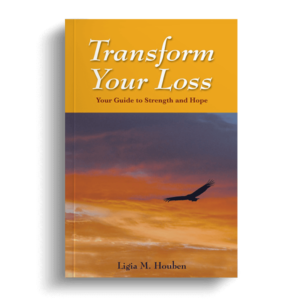
This past year was an important year in my professional life, and I am grateful. I joined the PESI (link) family and started presenting nationwide the seminar “Transforming Grief and Loss.” This has been very close to my heart as it is based on the 11 Principles of Transformation® the system I created to help people transform loss into growth. I also wrote a book with the same title, which has also been a source of joy. However, the greatest of my achievements was to finish writing the book about my father’s life. And…what makes it the biggest win? The fact that I have realized once more that our loved ones continue living in our hearts. My greatest purpose has been to immortalize my father’s message in a book.
Now, what about my greatest lesson to learn? It has been, to know how to self-manage. I am not saying to learn time management, but self-management. We all have 24 hours a day, it all depends on what we do with the time. It has to do with being able to prioritize; to evaluate what is important, and what can wait; to learn how to balance our personal and professional life; it is to embrace more me-time and be able to say no. I had a conversation with a client about the challenge we have with having too much to do. It seems we are always in a hurry! If we load our plate with too much food, it can give us the sensation we are “stimuli overload” and at the end, we are not having quality of life. In the seminars I do with PESI, one of the losses we explore is “loss of self” as we get buried under so many roles and responsibilities. At times these roles just happened. Other times, we allow them to happen; even when we are grieving. We may not take the time to grieve because we are too busy.
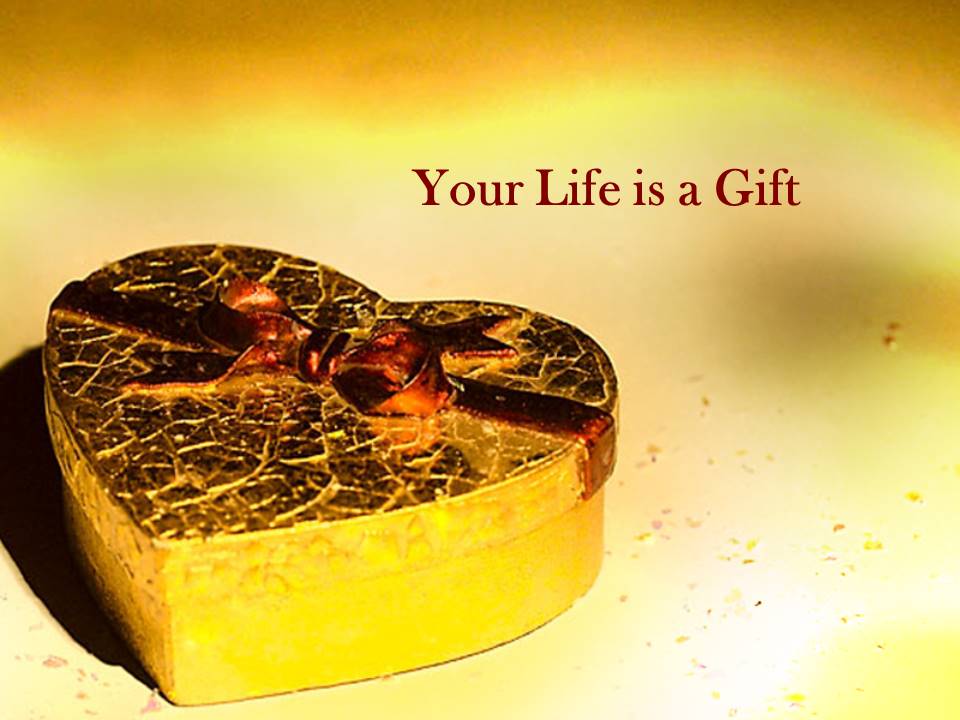
Because of this realization, my commitment this year is to manage myself in a better way. I want to let go of spending time in minor things and concentrate on what matters most. Life is precious. Life is short. Life is a gift. Therefore, instead of ripping off the paper as I unwrap it, I want to pull out the ribbons and open it in a delicate and loving manner.
How are you opening your gift?
Remember…your life has meaning!
Ligia/18
by Ligia Houben | Jul 11, 2018 | Blog US
Learn how to separate the majors and the minors.
A lot of people don’t do well simply because
they major in minor things.
— Jim Rohn
Our days on this Earth are limited. Although we may avoid thinking about this reality, we are not immortal and our loved ones are not immortal. Are we appreciating every moment of our lives? Are we paying attention to what is important or are we spending too much time on trivialities?
Working with so many people facing life transitions, especially the death of a loved one, I have come to realize many of us live blindfolded just to regret it afterward. It is time we remove the bandage from our eyes and start paying attention to what matters most. The time is now. Let’s not wait until something tragic happens that may force us to change our perspective. The time is now and it may take just a few minor steps to live a more fulfilling life.
As you read this, some things may come to mind. Take a pause and reflect on the following:
What are you doing on a daily basis? Are you expressing your love to your loved ones? Are you sharing time with them? Are you focusing on their qualities and appreciating them, or are you focusing on their shortcomings and complaining about them? Are you doing the things you enjoy doing or do you live thinking “I will do it later”? We do not know what the future will bring…so, if it is under your control, carry on with your dreams and goals, and do it now. You may be aware of the film “The Bucket List” with Jack Nicholson and Morgan Freeman. Let’s not wait until we are close to the end of our lives to do the things we always wanted to do – let’s do them now.
What about the kind of person you are? Are you satisfied with how you are or do you think “I will change later”… Later may not come and the memories your loved ones will have of you are of who you are now. If you know you should make some changes, like embracing more forgiveness and gratitude in your life or being more humble….do it now. Do not leave it for later. In his book “The Four Things that Matter Most”, Dr. Ira Byock shares with us what are the things people regret not saying more in their lives. In case you haven’t read the book (which I highly recommend!) these things are:
“Please forgive me,” “I forgive you,” “Thank you,” and “I love you.”
What about your daily activities? We are living the era of technology, and although the progress has been wonderful, we have paid the price of devoting too much time to emails, texting, or surfing the web (I can identify with this issue and am working on it)! Let’s be more selective about how we spend our time.
Let’s make sure, as Jim Rohn said, that we are not majoring on minor things. This brings to my memory what my father, Julio Martínez used to say, “because minor things are plenty, they become important.”
I know this can be challenging because it is so ingrained in our modern lifestyle, but just by taking few steps and making minor changes we may find ourselves connecting more with people (I mean, really connecting)!, living more in harmony, and knowing that if something happens, then we will have in our hearts peace of mind knowing we lived according to what mattered most.
Remember….your life has meaning!
Have a beautiful day,
Ligia/18