by Ligia Houben | Jun 10, 2018 | Blog US
According to the famous suicidologist, Edwin Schneidman, suicide happens when a person is experiencing psychache (psychological pain) which is impossible to bear. In his seminal work, Definition of Suicide, Schneidman stated that the most common emotion a person who is contemplating suicide experiences is hopelessness-helplessness. Taking this valuable information into consideration, we can take a closer look at what is happening in our society. Based on a recent study of the Centers for Disease and Prevention in Atlanta, in the last two decades suicide has increased more than 30%. Moreover, in The Last Dance. Encountering Death and Dying, the textbook I used when I taught Death and Dying at Florida International University, it shows that in 2005 there were almost 30,000 suicides a year in the United States. In 2016 the CDC shows there were nearly 45,000 deaths. These statistics show an increase of 50% in 11 years. What is provoking this increase? Who is dying from suicide and how can we prevent it?
This topic is getting a lot of attention after the unfortunate deaths from suicide of two famous people this past week- Kate Spade and Anthony Bourdain. These tragic incidents have promoted discussion about the causes of why people would take their own lives.
The CDC report shows us that suicide not only happens when the person suffers from a mental health condition. It may occur when the person doesn’t possess the necessary life skills to help them deal with stressful life events such as financial difficulties, job loss, and health issues among others. In older adults, the fact of growing older can also be a cause of suicide. Furthermore, it is increasing among middle-aged men as Martin Daubney points out in his article, Why does no one care when boys fail at school, and middle-aged men kill themselves? Daubney mentions a study in the UK that shows a 40% increase in suicide among middle-aged men in the last five years. In the United States, the highest suicide rate (19.72%) is among adults (45-54 years of age).
It is important to know that suicide is happening on a significant scale and it’s necessary we start having the conversation openly, so we can focus on prevention and awareness. In the seminars I impart nationwide on Transforming Grief and Loss. Strategies For Your Clients To Heal The Past, Change The Present and Transform The Future, we talk about how to build resilience, and suicide is always central to our discussion. Experiencing the loss of purpose and meaning, seems to be a major factor to lose hope for a future, and find suicide as the only way to end a life that is not fulfilling.
Let’s keep in mind that not only adults die from ending their lives, but also adolescents and children. Among the leading causes there seem to be a change of schools, peer pressure, and bullying (Grim, 2012). In a recent seminar, a counselor at a university shared with us that 40% of her clients have suicidal ideation.
How can we help
If you know someone who is suicidal, always validate their emotions. Remember that for them the pain is too vast to handle, and suicide is their only way out. Allow them to talk to you about how they feel instead of diverting the conversation (e.g., you’ll be OK!) and provide support. Please remember not to say others have it worse. Sometimes while trying to help, people make those comments, and they do not help much. Instead, provide information about hotlines and direct them to a professional who can help them find ways to cope with their life stressors.
Warning Signs
- Changes in personality or behavior
- Giving away possessions
- Talking about killing themselves or the desire to die
- Changes in eating and sleeping patterns
- Isolation
- Using alcohol or drugs
Risk Factors
- Feelings or hopelessness
- Mental disorders
- Health issues
- Previous ideation or attempts
- Substance abuse
- Financial losses
- Relationship problems
- Job loss
- Isolation and lack of resources
- Loss of a loved one
- Lack of purpose or meaning
- Fear of aging
- Lack of coping skills
- History of aggression
Lastly, let’s all keep in mind that understanding what may provoke someone to die from suicide can help increase awareness, participate in suicide prevention, and have an open and compassionate conversation.
Resources
https://suicidepreventionlifeline.org/how-we-can-all-prevent-suicide/
Lenaars, Antoon A. Edwin S. Shneidman on Suicide. Suicidology Online 2010; 1:5-18. http://www.suicidology-online.com/pdf/SOL-2010-1-5-18.pdf
Schneidman, Edwin. PhD (1977). Definition of Suicide. Jason Aronson, Inc.: New York, NY.
Grimm, Joe, Ed. (2012). The New Bullying-How social media, social exclusion, laws and suicide have changed our definition of bullying, and what to do about it: Read the Spirit Books and Imprint of David Crumme Media, LLC.: Canton, MA
DeSpelder, Lynne Ann and Albert Lee Strickland (2005). The Last Dance. McGrawHill: New York, NY
https://www.telegraph.co.uk/men/thinking-man/11966292/Why-does-no-one-care-when-boys-fail-at-school-and-middle-aged-men-kill-themselves.html

by Ligia Houben | May 23, 2018 | Blog US
This message is about you. It is a reminder of the special and unique person you are. You are an amazing human being with talents; with great qualities; with many gifts and yes, with some shortcomings as well. That is what makes you who you are! This week I want you to embrace the person you are with all your love and be thankful! Pay attention to all the things you have in your life with an open heart and open mind.
You will realize you have many things to be grateful. I don’t know if you are going through a very tough time in life and you find it difficult to be grateful this Thanksgiving. My heart goes out to you, and I validate all your feelings. Still, if you open your heart and turn your head to the side, you may be able to notice what you still have in your life. Take a closer look to that special person who is there for you when you are feeling blue; to the things you still have in life and because your heart grieves you are not noticing. Because many times it is easier to focus on what we do not have instead of being grateful for what we have and for the people we still have in our lives.
Just open your mind and open your heart and be grateful for what you have in your life; be grateful for whom you are; for all the things you can do; for your qualities, gifts, and talents; be grateful for your mind, as you can create powerful thoughts. Be grateful for your power of making decisions. Be grateful for having a voice; be grateful for having the skills to build the life you want and deserve.
Instead of staying in your comfort zone, where you feel safe even if you feel unhappy, let go of those ties and be grateful for the ability to make those changes. Be grateful for the capacity to start building the life you want.
Before you realize it, you will be feeling grateful for the wonderful life you have created, and appreciate it every day. I leave you with this meditation:
Find a quiet place where you can be in a comfortable position and close your eyes. With your eyes closed, begin scanning your body from head to toes and be thankful for every part of your body. Then, go into your inner self and be grateful for who you are, for all the parts inside of you that make you the unique person you are. Be grateful for yourself. Then, think about your loved (present or absent) and be grateful for each of them. Be grateful for your loved ones. Then, think about your friends and be grateful to be able to share with them. Be grateful for your friends. Be grateful for the things you have in your life, for where you live, the food you eat, the clothing you have, and the goals you have achieved in your life. Be thankful for what you have. Finally, be grateful for all your experiences, because they have made the person you have become. Be grateful for who you are. You are a special human being. Be grateful.
Remember…Your life has meaning!
Ligia M. Houben
by Ligia Houben | Feb 2, 2018 | All
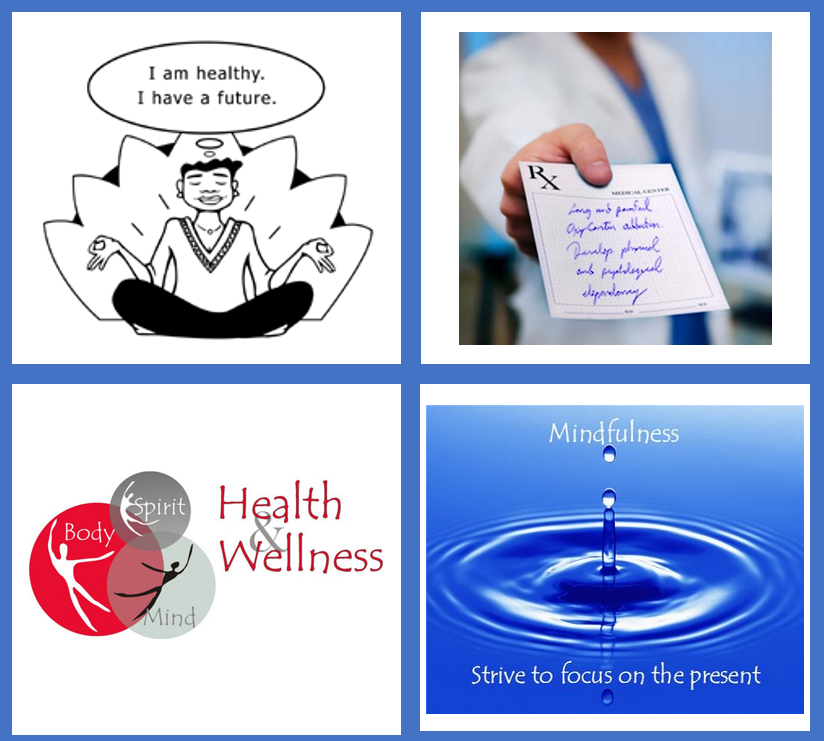
Learn how to practice mindfulness and meditation to improve your health.
February 17 & 24
March 3 & 10
Instructor: Susan D’Agostino, RN, CMMI
Certified Mindfulness and Meditation Instructor.
by Ligia Houben | Jan 1, 2018 | Blog US
As you start the year, take a pause and decide how you want this year to be. What do you want to achieve? What dreams do you want to make a reality? What things do you want to let go? The first day of the year is the perfect time to make that decision.
You may say, this year I want to be happier. I want to be more spiritual. I want to be successful.
You may have different goals. However, these may be too abstract. What I suggest you do, is to be more specific and be clear on what these goals mean to you.
- What would make you happier? What can you start doing NOW to make it happen?
- How can you be more spiritual? What can you start doing NOW to make it happen?
- What does success mean to you? What can you start doing NOW to make it happen?
These are just simple examples. However, they make a difference. Furthermore, instead of saying this year I will try to be more spiritual, start doing something towards being more spiritual today. There is no room for trying, as it gives the possibility of not happening. Start with taking the first step to make that unique goal a reality. It will make a difference in how you feel. It will make a difference on how the year evolves, and eventually how 2018 ends. You will be able to look back and say to yourself: This year I made it happen. Instead of saying, another year went by, and I wish I would have…
It is not about focusing on regrets. On the contrary, it is to learn from things that happened or didn’t happen in the year 2017. 2018 is the year you commit to making it happen. You may want to review how you ended 2017 following the suggestion I shared on this blog.
At times we move automatically in our lives by not paying attention. The end of the year came, and you may have said (I said it!) Wow! This year went by so fast! Well, it may feel it goes fast. However, we can also make it meaningful, make it special to us; make it special to our loved ones; to our community; to the world. Keep in mind that any small action we take can make a difference in our lives and in the lives of others.
Now, I want to give you this suggestion to start putting all these plans into action.
Take a piece of paper and make two lists.
On the first list, write down all the things you DO NOT want to happen this year. You may want to let go of things that are not contributing to your wellbeing. You may want to start saying no to things that are not adding to your productivity; to your meaning; to your spirituality; to your happiness.
Then, make a list of the things you want to happen this year. State them in the positive and in the present tense:
- This year I want….
- This year I want…
- This year I want….
Evaluate these important goals, and start today taking the first step. Today is the first day of the year, and if you take action, it will give you a great sense of accomplishment; it will give you a sense of hope; it will give you a sense of empowerment; It will give you a sense of control.
Make 2018 a meaningful and special year.

Ligia M. Houben

by Ligia Houben | Jun 8, 2017 | Blog US
If you are like me, you live in a world of distraction. Multiple things have the potential of distracting us from what we intend to do. For example, you may be one of those people who logs into the internet with the intention to look for something that would take few minutes, and then go back to what you were doing. However, what may happen? You start clicking on ads you see, articles, or images, and instead of being on the internet for 15 minutes, you stayed for an hour! This action distracted you from what was important and took precious time from your work; your family; your life.
I would say it is the information overload syndrome and most of us, from time to time, suffer from it.
Another distraction you may encounter is when you are watching the news or a program on TV. Suddenly, a pop up of an upcoming program, shows up. You intend to focus on the program, however, the breaking news announcement appears at the bottom of the screen. We find ourselves looking at different sources of information at the same time.
What about when you are with your family or exercising at the gym (having some me-time), and suddenly your phone starts beeping. You are either receiving a text, a message on WhatsApp, or a message on Facebook. We are constantly bombarded with distractions, and my theory is that, because of this distraction we are suffering, the need for being present in our lives has increased. The need of paying attention has augmented. The need to take a break has become imperative. This sense of being overwhelmed has created the need to embrace mindfulness which has become almost a movement. It is becoming part of our culture because it promises what we need the most…to be present in our lives. It teaches us to be present in what we are doing; to be present with our thoughts; with the people we love.
The idea of mindfulness is not a modern concept. It started with Gautama Buddha 2,500 years ago. I remember when I taught World Religions at the University, each time we talked about Buddhism and the concept of mindfulness, it was a challenging notion for my students to embrace because they loved to be distracted. They just loved to be doing multiple things at the same time. I remember telling one of my students, that the next time he lifted weights at the gym, to go lighter and paid attention to the effort of his muscles. The next time he came to class, he said, Professor Houben you were right! I dropped the weight and lifted slower, and my biceps were so sore! So, this concept of living mindfully can be applied to many things, including exercising, eating, and conversing.
Now, how can you apply mindfulness to other matters such as experiencing a health issue, feeling physical pain, or grieving? It is natural, when we are facing a challenging situation, to resist it or try to ignore it. However, it doesn’t make it disappear. We cannot escape grieving. We all grieve over one loss or another and what we need to learn is how to manage our grief. One of the meditations I will start doing at The Center for Transforming Lives once a month, will be on “Mindful Grieving” and it will be for any loss: the loss of a loved one; a breakup; a challenging change in your life that is making you feel lost and sad. It will help you go to that space and connect with your grief. Once you do that, you can release it, and bring some peace to your heart.
In case you are interested to know about the origin of Mindfulness, we will also be having a talk on Mindfulness from East to West. I will be doing this workshop with Susan D’Agostino, RN, a certified Mindfulness teacher on September 2nd. 2017.
Mindfulness: Health and Wellness with Susan D’Agostino R.N. & Ligia M. Houben
Now, take this moment to be mindful and connect with your inner self. Close your eyes. Take a deep breath, and pay attention to how you feel. Throughout the day, take a pause and pay attention to that moment and notice how you feel. This practice will help you be in touch with your emotions consciously. I will ask you to take a step further. Observe your thoughts (without judging them); this will also give you information about the effect they have on your emotions. It is just a simple practice that can make a huge change in your life.
Remember…your life has meaning.
Ligia M. Houben
Speaker, Author, Grief Expert & Life Coach