by Ligia Houben | Oct 9, 2025 | Blog US
We often say we’re “burned out” when we feel we have too much work, too many demands, too little time.
But what if what we’re feeling isn’t just exhaustion… what if it’s grief?
Grief doesn’t always appear after the death of a loved one. Sometimes, it hides behind our endless to-do lists, our pressure to perform, and our exhaustion from trying to do it all.
The Loss We Don’t Recognize
When we live in constant stress, our nervous system stays on high alert. We keep pushing, doing, performing — until we collapse.
And underneath that collapse is often a loss we haven’t acknowledged:
The loss of freedom — the feeling of having space to breathe, think, or simply be.
The loss of balance — when every moment feels scheduled, controlled, and monitored.
The loss of connection — with others, with our bodies, and even with ourselves.
The loss of joy — when everything becomes a task instead of a choice.
Burnout as a Form of Grief
Burnout can be a symptom of ungrieved loss — the loss of the lifestyle we once had, the identity we built around “managing it all,” or the illusion that we could handle everything without breaking.
We grieve the time we no longer have.
We grieve the version of ourselves who felt in control.
We grieve the energy we used to depend on.
This is not weakness. It’s the body and soul saying, “I need a pause.”
From Burnout to Healing
Healing begins by validating the grief beneath the exhaustion.
When we name the loss, we create space for compassion — not more pressure.
Ask yourself:
What have I lost that I haven’t allowed myself to grieve?
What freedom, routine, or version of me am I missing most?
Acknowledgment is not indulgence it’s truth.
And truth is where healing begins.
If you want to learn more about how to deal with Burnout listen to my podcast Are You Burned Out or Just Grieving?
Remember, pay attention to yourself. Your life has meaning!
Ligia M. Houben

by Ligia Houben | Sep 20, 2025 | Blog US
Burnout Is Everywhere
Burnout is everywhere. We hear about it at work, among entrepreneurs, in healthcare, among caregivers, even in young adults balancing studies and life. It’s described as exhaustion, stress, or overwhelm. We may feel we have too many things to do, too many responsibilities, or even too much information coming at us every second of the day.
But what if, beneath the fatigue, burnout is hiding something deeper? What if burnout isn’t only about doing too much…but about losing too much?
This is the hidden side of burnout we rarely name: grief.
Burnout and the Unspoken Losses
When burnout takes hold, we are not only drained — we are mourning losses that often go unnoticed.
Loss of balance. Rest disappears. Joyful moments are replaced with endless tasks.
Loss of self. Work or responsibility consumes identity, leaving little room for who we truly are.
Loss of connection. Relationships fade because we’re “too busy” or “too tired.”
Loss of meaning. We forget why we’re doing what we’re doing in the first place.
These losses may not involve a death, but they are still grief.
And when grief is unacknowledged, it weighs us down. It hides under the label of “burnout,” leaving us to treat symptoms without addressing the root.
Why We Don’t Recognize It as Grief
Culturally, we’re told grief belongs only to the death of a loved one. But grief is much broader. It is the natural response to any significant loss.
When we’re burned out, we may actually be grieving:
The version of ourselves that had hope, energy, and joy.
The dream of a life that felt balanced.
The peace we once felt before constant digital overload.
Because we don’t name this as grief, we dismiss it as “stress” or “time management issues.” We may even think it is “normal” to feel this way. And as long as we mislabel it, healing feels out of reach.
The Cost of Unacknowledged Grief
If we only treat burnout as a productivity problem, we miss the heart of the issue. That’s why advice like “take a vacation” or “learn better time management” often feels shallow.
Yes, those things may help temporarily. But when the heart is grieving, no planner or app will bring relief.
Unacknowledged grief shows up as:
Chronic exhaustion.
Detachment from work or relationships.
Numbness or loss of joy.
The haunting sense that something is missing.
And what’s missing is not just sleep or balance. What’s missing is connection, meaning, and validation of our losses.
From Awareness to Transformation: What Can We Do About It?
Acknowledging grief within burnout is the first step, but it is not the last. Healing begins when we respond to it with intentional choices.
1. Learn to Prioritize What Truly Matters
Not everything deserves the same urgency. Burnout deepens when we treat all tasks as equal and neglect what truly matters. Prioritizing is a way of protecting your energy and aligning with your values.
Choose your top three priorities each morning.
Ask yourself: “If I only accomplish these three things, will I feel aligned?”
Release or postpone what isn’t essential today.
Learn to delegate when possible.
When you prioritize with intention, you honor both your limits and your values. This creates space for healing, clarity, and renewed energy.
2. Redefine Productivity
Instead of asking, “What did I achieve today?” try asking:
“How satisfied am I?”
“What made me feel fulfilled?”
This reframes life away from checklists and toward what truly matters.
3. Create Boundaries With Compassion
Burnout thrives on “too much” — too much information, too many commitments, too many expectations. Start small:
Turn off notifications for one app.
Say no to one extra task this week.
Give yourself some “me-time” a couple of days each week.
Boundaries are not walls. They are acts of self-respect that give grief and healing space to breathe.
4. Ritualize Rest
Rest is not laziness. It is medicine. Create simple rituals that signal to your mind and body: I matter too.
A morning walk without your phone.
Journaling for five minutes before bed.
A weekly practice of unplugging for an hour.
When rest is woven into routine, it becomes sacred, not optional.
5. Reconnect to Meaning
Burnout feels worst when life feels meaningless. Ask yourself:
“What still matters deeply to me?”
“What is one small action that aligns with that value?”
Meaning is not always found in grand gestures — often, it begins with small, life-giving choices.
6. Seek Community, Not Isolation
Isolation deepens burnout. Healing happens when we share our stories and realize we are not alone.
Talk from the heart with a trusted friend.
Join a support group.
Find spaces where your grief — even if it’s “hidden grief” — can be validated.
Community transforms burnout from silent suffering into shared strength.
A Gentle Reminder
Burnout isn’t just about working too much or resting too little. It’s about what life takes from us when we’re stretched too thin: our balance, our identity, our meaning, our joy.
Therefore, acknowledge your grief as it deserves to be named.
The beauty is that there is hope: once we name it, we can change it. We can set boundaries, reclaim rest, seek meaning, reconnect with our essence, and rediscover belonging.
Keep in mind that burnout does not have to be the end of our energy, but an invitation to reimagine and visualize how we want to live.
Take one small step today — name what you’ve lost, and choose one way to honor yourself. Transformation doesn’t happen overnight, but it begins the moment you give yourself permission to heal.
Remember…Your life has meaning!
Ligia M. Houben

by Ligia Houben | Aug 29, 2025 | Blog US
When Life Feels Unfair
There are moments when life doesn’t go our way. We worked hard, we hoped, we planned—and yet, the outcome is not what we envisioned. These misfortunes can leave us feeling disappointed, defeated, or even ashamed.
Often, the first question people ask themselves is: “Why did I fail?”
This question, while natural, can keep us stuck. It pushes us into blame instead of growth.
Shifting From Blame to Learning
In coaching, we see misfortunes not as final verdicts, but as experiences that bring feedback. Instead of asking “Why did I fail?”, we can shift the inner dialogue toward:
• “What can I learn from this misfortune?”
• “What is this situation showing me about myself, my process, or my environment?”
• “How can I use this experience as a stepping stone rather than a stumbling block?”
This shift doesn’t dismiss the pain—it reframes it. By doing so, we move from dwelling on what went wrong to discovering how we can rise stronger.
Resources to Navigate Misfortunes
When misfortunes strike, having resources is essential:
• Inner grounding: journaling, meditation, prayer—tools that allow us to process disappointment rather than suppress it.
• Compassionate perspective: instead of labeling yourself a “failure,” recognize you faced a difficult situation that didn’t unfold as planned.
• Support networks: sharing your misfortune with others often reveals you are not alone in the experience.
• Resilient mindset: viewing misfortunes as redirections rather than dead ends.
Rising Stronger
Every misfortune carries within it the seed of strength. It may not feel like it in the moment, but as we process the disappointment, we realize: we are still here, we are still learning, and we are still capable of moving forward.
The truth is: misfortunes do not define us. What defines us is the way we choose to respond.
I invite you to this moment of reflection.
Think of a recent misfortune. Instead of asking “Why did I fail?”, try this:
“What is one insight or new perspective I can carry forward from this experience?”
From my heart to yours,
Ligia M. Houben

by Ligia Houben | Aug 27, 2025 | Blog US
Why We Avoid Talking About Wills
August is Make-A-Will Month—a gentle reminder about something many of us avoid: creating a will.
Why do we delay it?
We think we’re too young.
We feel uncomfortable facing the idea of death.
We believe it can wait until “someday.”
But avoiding this step doesn’t protect us—it often leaves our families unprepared during one of the hardest moments of their lives.
A Will Is More Than a Legal Document
Many see a will as a cold, legal formality. In reality, it is a profound act of love and responsibility.
A will allows you to:
Make sure your wishes are respected.
Reduce stress and conflict among your loved ones.
Provide clarity at a time of pain and confusion.
Leave a legacy of care instead of unanswered questions.
What I’ve Seen as a Grief Specialist
As a thanatologist, I’ve accompanied families in their grief for many years. I’ve seen the difference when a will exists—and when it doesn’t.
With a will: Families still grieve, but they do so with more peace. There is clarity. Their loved one thought of them and prepared a guide for difficult decisions.
Without a will: Grief often becomes heavier. Families face stress, uncertainty, and sometimes painful conflicts on top of their mourning.
It’s the same with advance directives. When conversations don’t happen, loved ones are left guessing at wishes—often in the middle of a crisis.
Not having the conversation does not protect us. It only postpones the pain and transfers it to those we love.
A Step of Love This August
Make-A-Will Month is not about paperwork—it’s about courage. Before the month ends, if you have been hesitating, make this decision. It will give you peace of mind. Remember that it’s about transforming fear into clarity and silence into peace.
Ask yourself the following questions based on your reality (as it changes from time to time):
Do I have a will in place?
If I do, is it up to date?
If I don’t, could this be the month I take this loving step for my family?
Final Reflection
Creating a will does not mean you are ready to die—it means you are ready to live responsibly, lovingly, and with purpose.
This August, let’s turn avoidance into action and fear into a legacy of love.
From my heart to yours,
Ligia M. Houben, MA, FT
Thanatologist | Grief Specialist | Author | Speaker

by Ligia Houben | Aug 22, 2025 | Blog US
Decisions from the Heart
Have you ever thought about how the choices we make today can bring peace tomorrow—for ourselves and for those we love? When we think about end-of-life decisions, it may feel heavy at first, but in reality, these conversations are about life. They are about living with intention, expressing love through clarity, and leaving a legacy of peace instead of uncertainty.
A Shift in Perspective
When we acknowledge that life is finite, something shifts inside of us. What truly matters comes into focus: love, connection, meaning.
End-of-life decisions are not just medical—they are an act of love. They are a way of saying:
I choose to ease the burden for my family.
I choose to honor my values and my vision of dignity.
I choose to live consciously and purposefully until the very end.
Why This Conversation Matters
Too often, families struggle when these decisions are left unspoken. In moments of crisis, uncertainty adds unnecessary pain.
But when someone has expressed their wishes, reflected on what a meaningful life means to them, and chosen with clarity, there is peace. There is freedom for loved ones to simply be present—in love, not in doubt.
This is not a conversation about giving up. It is a conversation about living aligned with purpose and values, even in our final chapter.
An Invitation
On August 30 I will be offering a special in-person workshop in Miami, FL where we will explore these themes with compassion and openness.
Why Join?
What does it mean to live with purpose at every stage of life?
How do we make decisions that reflect our values, our faith, and our relationships?
You will receive a packet of the Five Wishes
How can we bring peace and clarity to those we love?
This is more than a workshop—it is a sacred space. You will leave not only with practical tools, but with a renewed sense of courage and a deeper connection to what truly matters.
Because when we face the end, what really matters is how we have lived.
REGISTER HERE: REGISTER HERE
For those who cannot attend in person, there is also the possibility of offering this workshop online if there is interest.
If you would be interested in attending this workshop online, simply reply to this email and let me know.
Remember…Your life has meaning.
From my heart to yours,
Ligia M. Houben

by Ligia Houben | Jul 29, 2025 | Blog US
There’s a kind of grief many women carry quietly.
It’s not always the grief of losing someone else.
Sometimes, it’s the grief of losing yourself.
It can begin after the death of a loved one.
After caregiving.
After divorce.
After a diagnosis.
After a dream fades.
Or simply after years of being everything to everyone else.
You may not even realize it’s grief at first.
You just know something feels off.
You feel disconnected.
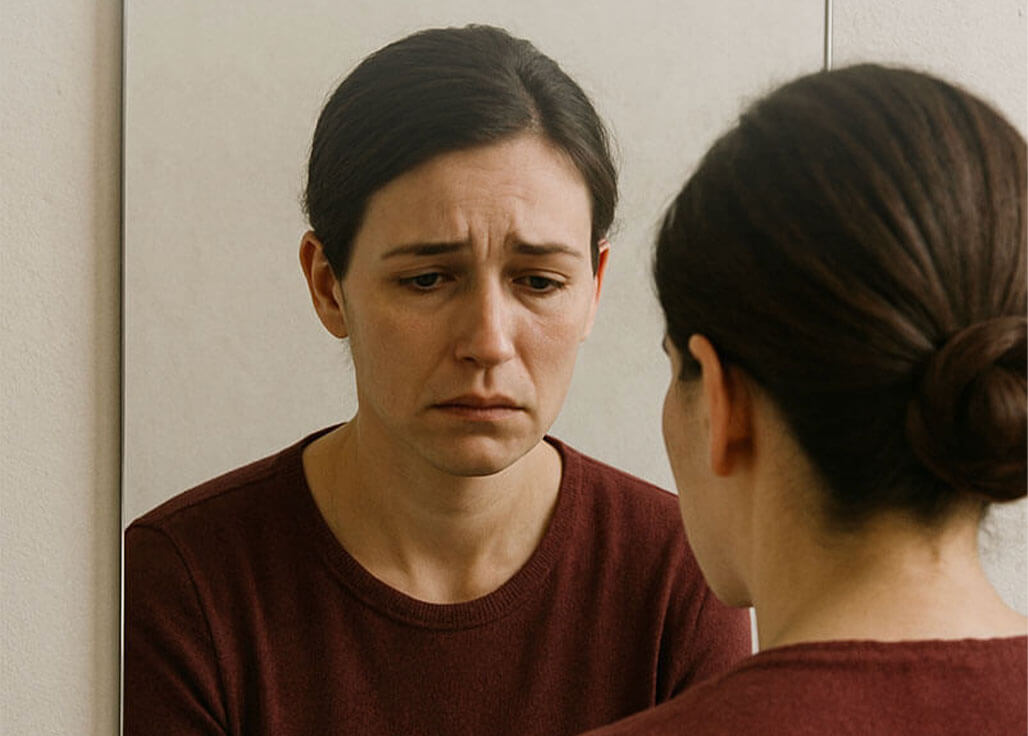
You look in the mirror and wonder, Where did she go?
The vibrant, joyful, curious, purposeful version of you.
This is what I call the grief of the woman you used to be.
So many women go through this without ever naming it.
We show up. We smile. We keep going.
But inside, there’s a quiet ache—because something was lost.
Maybe it was the career you dreamed of.
The creative energy you once had.
The sense of confidence and clarity that used to guide you.
Or the woman you were before you experienced profound loss.
This grief is real.
And it deserves space. It deserves tenderness. It deserves you.
– Stuck, like life is moving but you aren’t.
– Numb, like you’re functioning but not really living.
– Heavy, as if you’re carrying more than just your own emotions.
You are not failing.
You are not broken.
You are grieving.
And you are transforming—even if you can’t see it yet.
There is wisdom in this space.
There is healing when we stop pretending.
There is strength in naming what we’ve lost—not just in others, but in ourselves.
And there is beauty in reclaiming even a small piece of who you were…
Or discovering who you’re ready to become.
So if something in you is quietly asking to be heard. If you’ve been carrying more than you can name
I invite you to join me for a free webinar:
Are You Grieving the Loss of the Woman You Used to Be?
A sacred space to acknowledge your pain,
honor your truth,
and take the first step toward healing from the inside out.
-
August 13th, 2025
-
7:00PM (ET)
-
Zoom (link sent after registration)
-
You’ll receive a reflective handout to guide your experience.
You are not alone in this.
And your healing matters.
My heart is with you,
Ligia M. Houben