by Ligia Houben | Jul 29, 2025 | Blog US
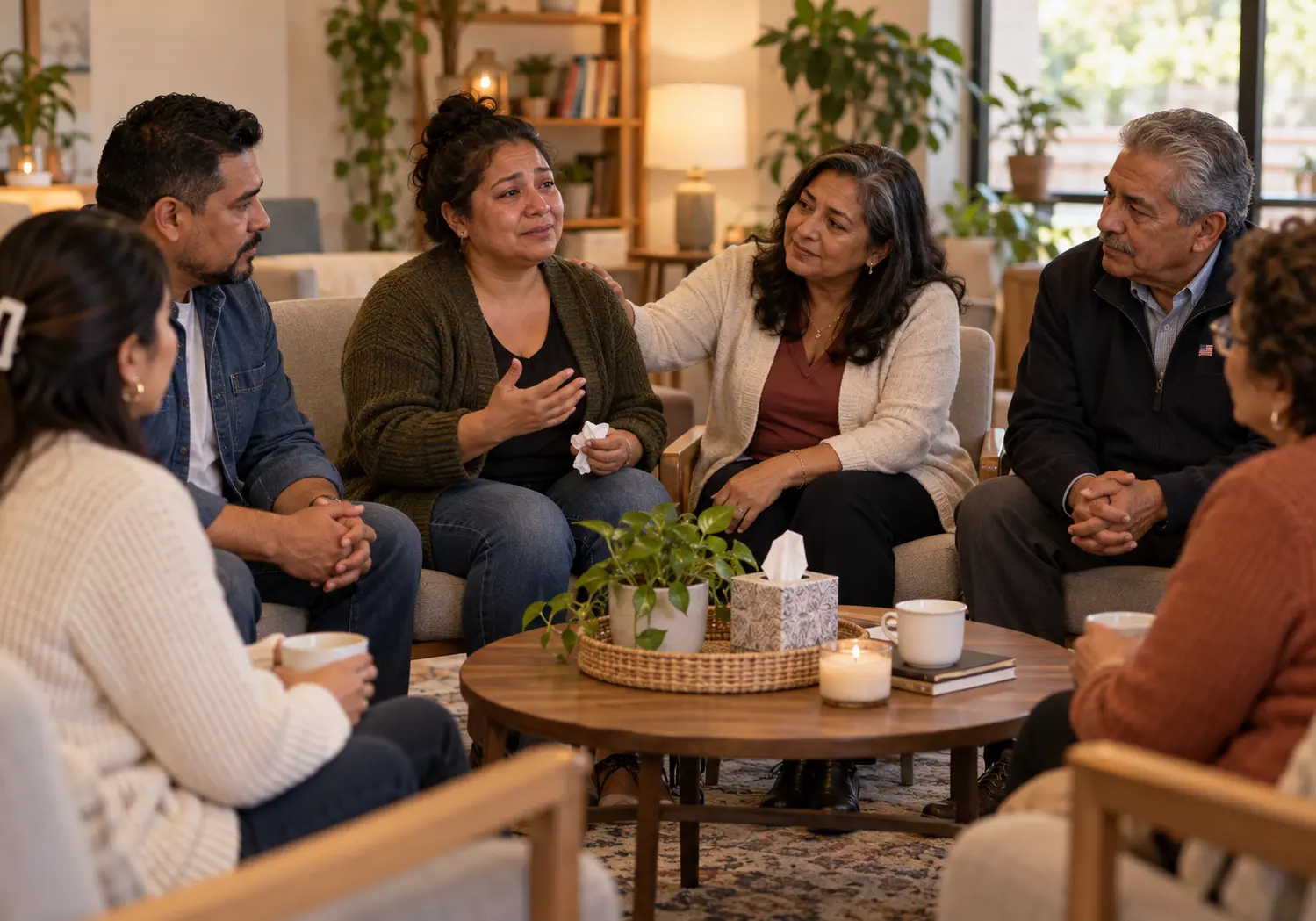
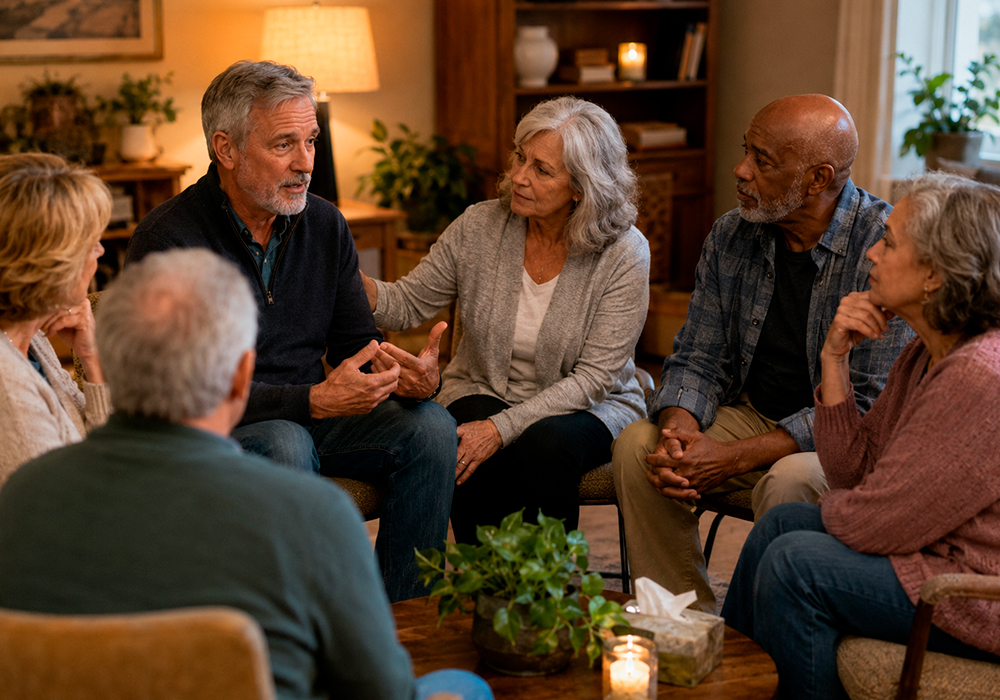
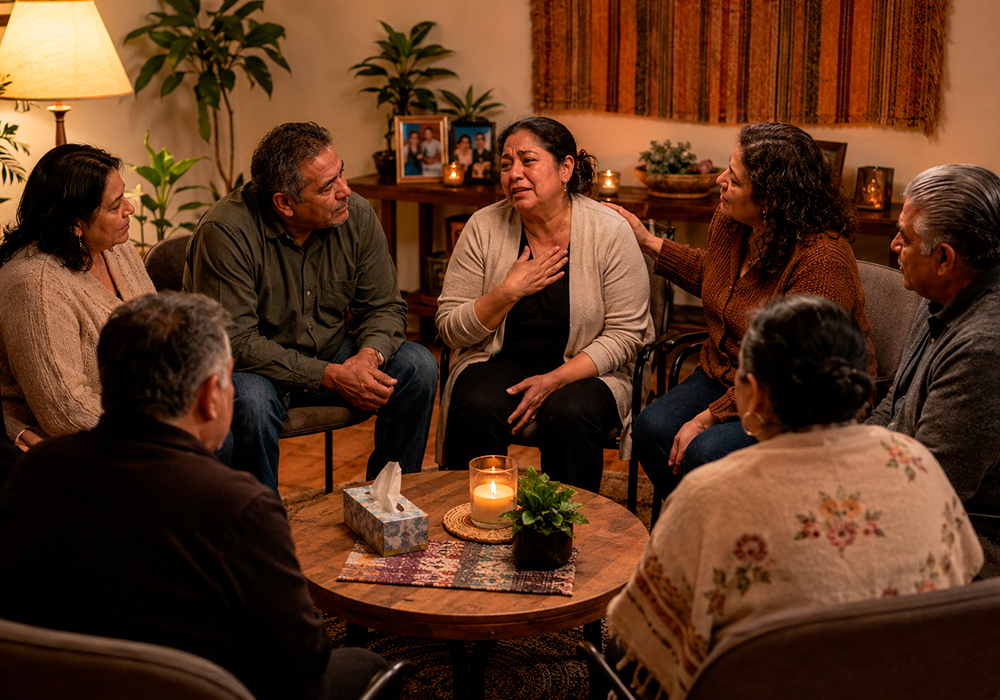
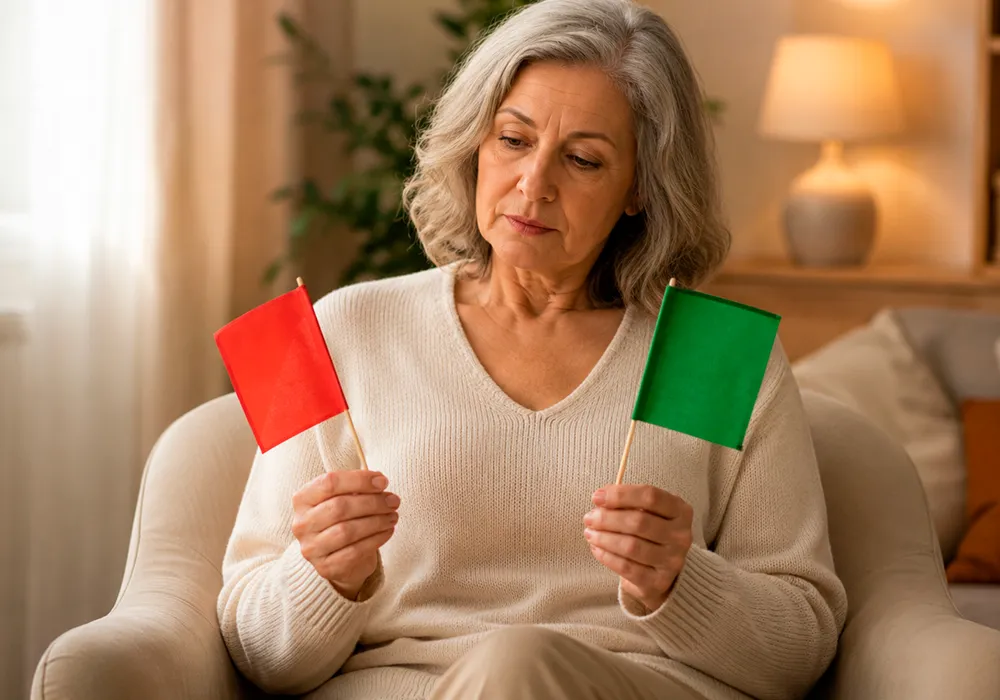
There’s a kind of grief many women carry quietly.
It’s not always the grief of losing someone else.
Sometimes, it’s the grief of losing yourself.
It can begin after the death of a loved one.
After caregiving.
After divorce.
After a diagnosis.
After a dream fades.
Or simply after years of being everything to everyone else.
You may not even realize it’s grief at first.
You just know something feels off.
You feel disconnected.
You look in the mirror and wonder, Where did she go?
The vibrant, joyful, curious, purposeful version of you.
This is what I call the grief of the woman you used to be.
So many women go through this without ever naming it.
We show up. We smile. We keep going.
But inside, there’s a quiet ache—because something was lost.
Maybe it was the career you dreamed of.
The creative energy you once had.
The sense of confidence and clarity that used to guide you.
Or the woman you were before you experienced profound loss.
This grief is real.
And it deserves space. It deserves tenderness. It deserves you.
– Stuck, like life is moving but you aren’t.
– Numb, like you’re functioning but not really living.
– Heavy, as if you’re carrying more than just your own emotions.
You are not failing.
You are not broken.
You are grieving.
And you are transforming—even if you can’t see it yet.
There is wisdom in this space.
There is healing when we stop pretending.
There is strength in naming what we’ve lost—not just in others, but in ourselves.
And there is beauty in reclaiming even a small piece of who you were…
Or discovering who you’re ready to become.
So if something in you is quietly asking to be heard. If you’ve been carrying more than you can name
I invite you to join me for a free webinar:
Are You Grieving the Loss of the Woman You Used to Be?
A sacred space to acknowledge your pain,
honor your truth,
and take the first step toward healing from the inside out.
-
August 13th, 2025
-
7:00PM (ET)
-
Zoom (link sent after registration)
-
You’ll receive a reflective handout to guide your experience.
You are not alone in this.
And your healing matters.
My heart is with you,
Ligia M. Houben
by Ligia Houben | Jul 10, 2025 | Blog US
Expanding on the value of gratitude.
In the previous blog, I mentioned gratitude as one of the spiritual tools. On this occasion, I would like to expand on the value of being grateful and how it influences the quality of our lives. There have been seasons in my life when everything felt like it was shifting—when familiar roles dissolved, relationships changed, and the future seemed uncertain. In these moments of loss and transition, one quiet force has always guided me home to myself: gratitude.
Gratitude is one of the most powerful spiritual tools we can access.
It doesn’t deny our pain. It doesn’t ask us to minimize our sorrow. What it does is help us hold space for both: the ache of what has changed and the beauty of what remains.
In my methodology, the Third Principle of Transformation® invites us to activate the spiritual dimension through gratitude, forgiveness, and love. These three aren’t just values, they are practices that help us heal from the inside out.
Gratitude Is a Choice, not a Condition
Many people believe we can only feel grateful when everything is going well. But I’ve learned—and witnessed in others—that the most life-giving kind of gratitude emerges in the midst of struggle.
It’s not about forcing positivity. It’s about asking, even gently:
What can I be thankful for right now, in the middle of this experience?
Sometimes the answer is simple: a sunrise, a kind friend, a moment of stillness. Sometimes it’s deeper: the strength I didn’t know I had, the clarity that loss has given me, the love that still lives in my heart.
Gratitude becomes a shift in perception—a new way of seeing.
Why Gratitude Matters in Times of Change
When we’re going through a transition, especially after a loss, our nervous system is on high alert. We may feel disconnected from our sense of identity, safety, or a sense of belonging.
Practicing gratitude brings us back to the present. It reminds us that even in the unknown, there is something—a thread of goodness, a quiet moment, a gentle presence—that we can acknowledge.
And that acknowledgment can ground us. It can offer a sense of purpose, even when we don’t have all the answers.
A Tool for Reconnection and Growth
In my work with grieving individuals and those navigating life transitions, I often witness how gratitude slowly opens the heart. It reconnects us—to ourselves, to others, and to the spiritual dimension of our journey.
Gratitude doesn’t erase the pain, but it expands our inner world so that the pain isn’t the only thing we feel. It creates space for light, meaning, and transformation.
When practiced regularly, it helps us reframe our story—not as one defined by what was lost, but as one shaped by love, courage, and growth.
If you’re walking through change right now—whether it’s the loss of a loved one, the loss of identity, or a shift you didn’t expect, I invite you to pause and reflect:
What is still here, even now?
What has this experience taught me about my strength, my needs, my heart?
What can I thank life for today, however small?
Gratitude doesn’t need to be grand. It only needs to be true.
And the more we practice it, the more it becomes a bridge—from surviving to truly living.
With appreciation and presence,
Ligia M. Houben
by Ligia Houben | Jul 10, 2025 | Blog US
Honoring the Third Principle of Transformation®
When we experience loss or deep life transitions, we often search for something to hold on to—something that grounds us when everything else feels uncertain. Through my own journey of grief and healing, and in my work guiding others, I’ve found that the most powerful compass lies not outside of us, but within us.
This is why the Third Principle of Transformation® in my methodology focuses on three profound spiritual tools:
Gratitude, Forgiveness, and Love.
These are not just abstract concepts. They are active forces. When practiced with intention, they help us move from suffering toward inner peace and transformation—from the inside out.
Gratitude: Seeing with New Eyes
Gratitude isn’t about pretending everything is fine. It’s about choosing to notice what is still here, even amid the pain. It’s about honoring the gifts, the lessons, the love that was shared—and finding meaning, even when things didn’t go as planned.
When we practice gratitude during grief or change, we shift our attention from emptiness to presence. We remember that life, even in its imperfection, continues to offer us beauty and connection.
Gratitude becomes a spiritual anchor, reminding us that we are still alive, still capable of feeling, and still open to healing.
Forgiveness: Freeing the Heart
Forgiveness is not forgetting. It’s not excusing hurtful actions. It’s not rushing past anger or betrayal. Forgiveness is a decision to stop carrying the weight of pain in our hearts. It’s a release—a sacred act of saying, “I will not let this define me anymore.”
Whether we are forgiving others, life itself, or ourselves, this practice opens the door to compassion. It allows us to soften what has hardened, and to begin anew with tenderness and truth.
In grief, forgiveness is often what unblocks our ability to move forward. It clears the path for love to enter again.
Love: The Energy That Transforms Everything
At the heart of every healing journey is love.
Love for the person we lost.
Love for the version of ourselves that made it through.
Love for life, even in its complexity.
Love is what connects us beyond death, beyond separation, beyond change. It’s the thread that never breaks. When we live from love, we move with intention. We choose compassion over bitterness, presence over avoidance.
Love becomes our guide. It reminds us that we can still live a meaningful life—one that honors our losses while staying open to joy.
Living the Third Principle
When we invite gratitude, forgiveness, and love into our lives, we activate the spiritual dimension of our healing. We remember who we are beyond the pain. We become active participants in our own transformation.
This is the heart of my work: not to erase the loss, but to help you live with it—and grow from it—with grace, honesty, and courage.
May you find one small moment today to be grateful.
One step toward letting go of what no longer serves you.
And one breath grounded in love—for yourself, and for the path you’re walking.
With tenderness and hope,
Ligia M. Houben
by Ligia Houben | Jul 10, 2025 | Blog US
When grief enters our lives, it doesn’t just affect how we feel; it affects how we see. It can quietly reshape our perception of everything: our past, our present, and the possibilities for the future.
Suddenly, what once brought us joy may feel out of reach. Warm memories turn dim. Achievements feel empty. Even laughter from the past echoes differently in our minds. Not because we are weak, ungrateful, or broken, but because grief changes how we process reality. It’s as if someone placed a filter over the lens of our life, and everything is now seen through the shadows of what we’ve lost.
How Grief Alters Our Perception
This emotional lens is especially heavy when grief is prolonged, unresolved, or complicated. You may find yourself looking back on your life and feeling like nothing ever really matters. Even moments filled with love, joy, or success can seem insignificant or painful through the eyes of grief.
The places where you once felt safe might now feel foreign. The people you trusted might seem distant. Life itself may appear unpredictable or unfair.
This experience is not uncommon. It’s part of how the grieving brain tries to make sense of deep emotional pain. But while this perception may feel all-encompassing, it isn’t the end of the story.
The Gentle Invitation of Healing
Here’s a gentle truth I’ve discovered over years of walking alongside people in grief: just as our vision can be clouded by sorrow, it can also be softened by healing.
Healing doesn’t mean forgetting. It doesn’t mean denying the loss or pretending things are okay. True healing is about learning to see your life with new eyes, eyes that honor your pain, but also leave space for the beauty that still exists.
As a grief professional, I don’t try to erase anyone’s memories or pain. That’s not healing. Instead, I offer a compassionate space to help people look again. To view their story not only through the lens of what was lost, but also through the lens of what was meaningful, what was loved, given, received, and endured.
Remembering the Beautiful Alongside the Broken
With time and tenderness, many people begin to notice things they couldn’t before. They see that their grief is a reflection of their love. They recognize the strength it took to survive. They remember not only the moment they said goodbye, but also the thousand small moments that came before—the laughter, the presence, the connection.
Even in the same memory, there can be sorrow and sweetness. Even in the same life, there can be suffering and strength.
Grief may tint the lens, but healing allows us to adjust the focus.
A powerful metaphor I often share with clients is this: two people can look at the same painting of the sun low in the sky, and one may see a sunrise, while the other sees a sunset. Neither is wrong. The difference lies in perspective.
Grief may convince us that every image is a sunset — an ending. But healing invites us to consider: what if it’s a sunrise?
You don’t have to force that shift. You don’t have to rush. But know that it is possible. The lens through which you see your world can be gently cleaned—not to forget, but to honor everything you’ve lived… and everything that still awaits.
That’s the power of hope.
by Ligia Houben | Jun 7, 2022 | Blog US
The Art of Accompanying in Grief
This writing is an excerpt from a Facebook Live I did in Spanish, on June 21, 2020.
Good afternoon, everyone, we are continuing with our Sunday talks at 6pmET, 4 pm Nicaragua time. I always mention Nicaragua in a special way because being Nicaraguan gives me a lot of emotion to connect with the people of my homeland. I welcome you all to this Facebook Live. I had certain weeks of not doing them since I was going through a personal situation, a unique situation. Many of you know that my beloved mother, as I called her, and I will always call her, passed away two weeks ago. It has been something very strong, very hard, very painful. And as I say, grief is moment by moment. That is why I wanted to bring this message today.
Because this message is dedicated to all those people who are grievers, to those people going through the death of a loved one, and it is also addressed to those people who wish to accompany the griever. And I wanted to call this talk “the art of accompanying in grief.” What makes me call it an “art”? Because it’s an art! And as I’ve always told my clients when they’ve faced the loss of a loved one, people maybe tell you things with the best of intentions and you may feel in your heart that they didn’t help you. Why does this happen so often?
As we have said on other occasions, in our Western society we do not like to talk about death or talk about grief. Who likes it? But we all go through it… [that’s why] I wanted to talk about this.
What makes it an art, accompanying others in grief? Always knowing that it is about the other person. It is to accompany. It’s being there. How many times do friends and family members call me and say: “Ligia I’m going to go to a wake, I’m going to go to a funeral, I’m going to go visit someone who lost a loved one, what do I say? I don’t know what to tell them.”
The biggest thing we can do is to be there. Offer our love; to offer our understanding, to give them love, that’s what we need. Sometimes there are words that are said again as I said before, with the best of intentions. Sometimes what we need most is to be allowed to talk, that someone “holds the space” for us.
What the griever needs are to be listened to and understood. That if one wants to scream, let us scream; not to tell us, don’t feel like this, don’t tell us she wouldn’t want to see you like this, or he wouldn’t want to see you like this, don’t tell us you have to be strong… I’ve always said it in seminars, or to my clients: What does it mean to be strong? Does it mean to put on a mask as if we are not feeling anything? Or to be strong is to have the ability to connect with your real feelings and have that spiritual capacity to be able to express them? What does it mean to be strong to you?
I have shared this writing in its entirety in my new book Déjame vivir mi duelo…and heal from the inside out, (Allow Me to Grieve…and Heal from the Inside Out), which will be published in June, just for the second anniversary of my beloved little mother. This fills my heart with joy. At the end of the year, it will be available in English.