by Ligia Houben | Mar 13, 2026 | Blog US
There are moments in life when an unexpected event interrupts everything.
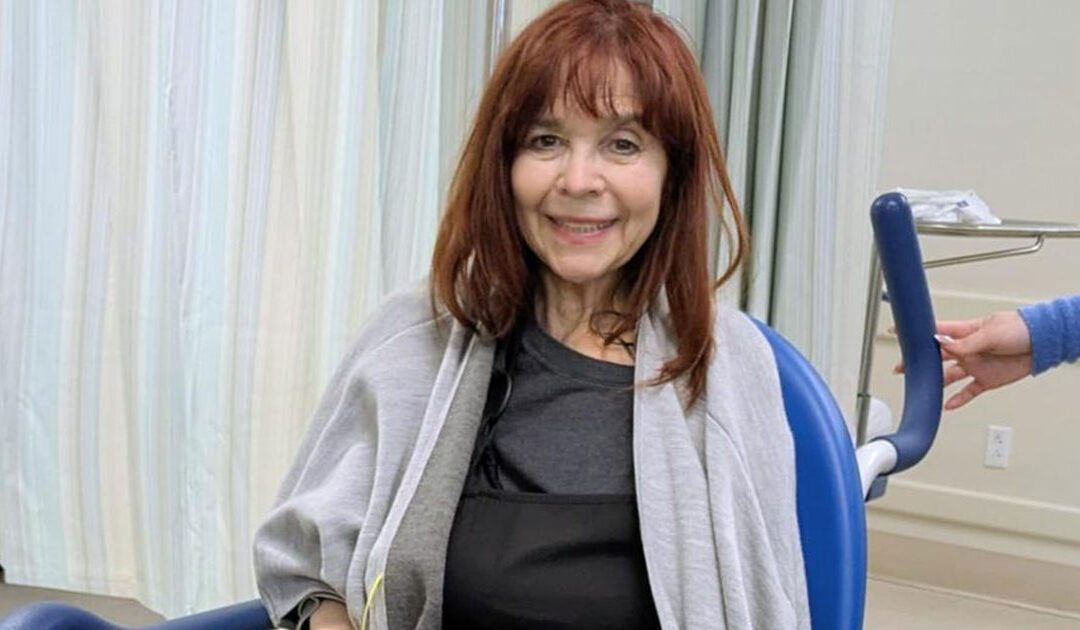
Recently, I broke my left wrist. Being lefty, it’s my dominant hand. What followed was reconstructive surgery, immobilization, and the sudden realization that even simple daily tasks would now require help, patience, and adaptation.
Physically, it was a fracture.
Emotionally, it was something more.
When Injury Becomes Loss
We often associate grief with the death of a loved one.
But grief is the natural response to any significant loss.
Injury can be a loss.
The loss of independence.
The loss of normal routine.
The loss of strength.
The loss of the body we rely on without thinking.
When my wrist was immobilized, I felt something deeper than discomfort. I felt vulnerability. I felt limitation. I felt the frustration of not being able to do what I normally do with ease.
And that, too, is grief.
Disenfranchised Grief After Surgery
Many people minimize this kind of experience.
“It’s just a broken bone.”
“At least it’s not worse.”
“You’ll recover.”
And while all of that may be true, it does not erase the emotional impact.
This is what we call disenfranchised grief — grief that is real but often not validated by others.
When we do not recognize it, we may push it aside. We may expect ourselves to be “strong.” But unrecognized grief does not disappear. It goes inward.
Healing from the Inside Out
As someone who teaches the 11 Principles of Transformation®, I was reminded that healing is never only physical.
Recovery asks for:
• Patience
• Humility
• Acceptance
• Trust
• Self-compassion
It asks us to slow down.
It asks us to allow support.
It asks us to acknowledge that something changed.
And when we validate that change — rather than dismiss it — healing becomes deeper.
What This Experience Taught Me
This broken wrist reminded me that:
• Our bodies carry stories.
• Loss is not always dramatic to be meaningful.
• Vulnerability is not weakness.
• And healing, even when uncomfortable, can be transformative.
If you are recovering from surgery, injury, or any unexpected change, allow yourself to recognize the loss within it.
Validation is the first step toward transformation.
Healing happens from the inside out.
From my heart to yours,
Ligia M. Houben
by Ligia Houben | Feb 26, 2026 | Blog US
When we think about grief, we often think about the death of a loved one.
But there is another kind of grief that many people carry quietly:
the grief of no longer having the life we once had.
We may grieve a lifestyle.
Friendships that changed.
Activities that once defined our days.
A sense of identity that no longer fits.
Sometimes nothing “dramatic” happened.
Or perhaps everything did.
A move.
A divorce.
A health change.
A career shift.
A loss that altered the structure of life itself.
And yet, this grief often goes unspoken and it is not validated. We try to ignore it.
What makes us do this?
We may feel it is… frivolous.
People may make comments such as:
“You should be grateful.”
“At least you still have…”
“It could be worse.”
This kind of grief is what we call disenfranchised grief — grief that is real but not always acknowledged or validated by others.
And when grief is not validated, it doesn’t disappear.
It goes inward. It gets suppressed.
You Are Not Weak for Missing Your Old Life
It is natural and human to miss what once gave you meaning.
You are not shallow for missing:
the way your days used to flow
the social circle you once had
the version of yourself that felt familiar
the identity that made sense
You are grieving continuity.
You are grieving the life that felt known.
And that grief deserves space.
What Makes This Type of Grief So Difficult
This grief is challenging because:
There is no funeral
No ritual
No public acknowledgment
No one asking how you’re doing
So you carry it quietly.
You may even judge yourself:
“Why am I so affected?”
“Others have it worse.”
“I should be over this.”
But grief is not a competition.
Loss is loss.
When a life chapter ends, something inside us must reorganize.
That takes time. That takes adaptation. That takes acceptance.
How to Cope with the Grief of a Lost Life
1. Name It
Simply acknowledging:
“I miss my old life”
is powerful.
Naming grief gives it dignity.
2. Allow Both Gratitude and Sadness
You can be grateful for what you have
and still mourn what changed.
Both can exist.
3. Honor What Was
What you had was important to you.
It was part of your identity.
It was part of your worldview.
It gave you joy.
You are allowed to honor that chapter.
4. Redefine Identity from The Inside Out
Instead of asking:
“Who am I now?”
ask:
“What parts of me remain?”
You are not starting from zero.
You are evolving.
5. Create Small Continuity
Even one familiar activity, habit, or connection can help rebuild a sense of stability.
Grief softens when life regains rhythm.
You Are Not Alone in This Quiet Grief
Many people grieve silently for the life they once knew.
You may not see it on social media.
You may not hear it in conversations.
But it exists in many hearts.
If this resonates with you, know this:
Your grief is understandable.
You are being human.
And…you can still make the choice of who you are becoming.
Remember, your life has meaning!
Ligia M. Houben
by Ligia Houben | Jan 23, 2026 | Blog US
When we are grieving, there is a conversation that never stops.
It doesn’t happen out loud.
It happens inside.
It is the voice that greets you when you wake up and remember.
The voice that walks with you through the day.
The voice that appears in the quiet moments and in the hardest ones.
And that inner conversation has far more influence than most people realize.
After a loss, many people find themselves repeating phrases like:
“I can’t do this.”
“I can’t go on without them.”
“This is too hard.”
“This pain will never end.”
“My life is over.”
When grief is deep, these do not feel like thoughts.
They feel like reality itself.
And in a way, they are — because the way you speak to yourself is shaping the way you are living your grief.
The Inner World You Live In
Grief already hurts.
It already changes everything.
It already asks more of us than we ever imagined we could give.
But the emotional world you live in is not created only by what happened.
It is also created by the story you are telling yourself about what happened.
Your inner conversation becomes the emotional climate of your life.
If your inner voice says, again and again:
“I can’t.”
“I’m not able.”
“This is impossible.”
Then every small step forward feels unreachable before you even try.
Not because you truly cannot.
But because your inner world is being organized around those words.
Consciousness Is the First Movement of Healing
There is something very powerful that happens when you begin to notice how you speak to yourself.
Not to judge it.
Not to correct it.
Not to force it to change.
Simply to become aware.
Because awareness creates space.
And space creates choice.
You may not be able to change what happened.
But you can begin to change how you are standing inside what happened.
That is not denial.
That is not pretending.
That is not “being positive.”
That is inner presence.
That is inner leadership.
Pain Is Inevitable. Suffering Is Shaped.
Pain is part of loving.
Pain is part of losing.
Pain is part of being human.
But suffering often grows in the way we narrate what we are living.
There is a deep difference between:
“I can’t live without them.”
and
“I don’t yet know how to live without them.”
“My life is over.”
and
“My life has changed forever, and I am learning how to be in this new life.”
“I am not strong enough for this.”
and
“This is very hard, and I am here, breathing, one day at a time.”
The second language does not minimize the pain.
It honors it — without turning it into a prison.
The Relationship You Have With Yourself in Grief
In grief, you don’t only miss the person you lost.
You also meet yourself in a new way.
And the way you speak to yourself in this season becomes the most important relationship you have.
If your inner voice is harsh, demanding, or hopeless, healing has no safe place to land.
If your inner voice begins, little by little, to include:
Gentleness.
Patience.
Respect for your rhythm.
Permission to be where you are.
Then something subtle but profound happens:
You don’t suddenly feel “better.”
But you begin to feel accompanied inside yourself.
And that changes everything.
This Is Not About Forcing Strength or Positivity
This is not about telling yourself you should be okay.
This is not about rushing the process.
This is not about replacing pain with nice words.
This is about learning to speak to yourself with truth and with kindness at the same time.
Sometimes the most powerful inner sentence is simply:
“Yes. This is very hard.”
“And I am still here.”
Your Inner Conversation Is Your Daily Medicine
You live inside your words.
You breathe inside your interpretations.
You walk through your days inside the meaning you are giving to your experience.
That is why your inner conversation is not a small thing.
It is the place where your healing is either supported or made heavier.
The first real step forward in grief is not something you do in the world.
It is something you begin to do inside:
You begin to change the way you accompany yourself.
Remember This
You do not heal by forgetting.
You do not heal by leaving love behind.
You heal by learning how to live differently while carrying love with you.
And the voice that will guide you in that learning…
Is your own.
From my heart to yours,
Ligia M. Houben

by Ligia Houben | Jan 8, 2026 | Blog US
At the beginning of every year—or at the beginning of any new chapter in life—we are given a quiet but powerful invitation.
We can choose to let time simply pass…
Or we can choose to live with intention and meaning.
Every year, every season, every stage of life can become “just another year”… or it can become a meaningful one. The difference is not found in what happens to us, but in how we respond to what happens to us.
I don’t know what you may be facing right now. Perhaps you are beginning this year with hope and excitement. Or perhaps you are carrying pain, uncertainty, grief, or deep exhaustion in your heart.
If you are going through a difficult time, I want you to know this: I see you. And my heart goes out to you.
There are moments in life when it feels almost impossible to imagine that we can live a meaningful or fulfilling year. When loss, change, or disappointment has touched our lives, simply getting through the day can feel like enough.
And yet… even then… especially then… something very important remains true:
We still have the power to choose our attitude.
When we allow ourselves to be completely overtaken by external circumstances, we slowly lose our sense of agency. We begin to feel like victims of life rather than participants in it.
But what if, instead of seeing ourselves as victims of the situation, we chose to see ourselves as survivors?
What if we gently turned inward and opened our own inner toolkit?
Because whether we realize it or not, we all carry within us extraordinary resources.
Take a moment and ask yourself:
Which of these do I need most right now?
Faith
Patience
Hope
Courage
Persistence
Gratitude
Forgiveness
Endurance
Resilience
Compassion
Strength
Peace
Love
Once you recognize the quality your heart needs most… use it.
Don’t leave your inner life up to fate or circumstances.
Your life is not shaped only by what happens to you.
It is shaped by your vision, your choices, and your inner determination.
If the vision we carry inside is one of failure, then that is the direction our life will tend to move toward.
If the vision we hold is one of sadness or hopelessness, then that will color everything we experience.
But if the vision we choose is one of meaning, gratitude, and love—then even in the midst of difficulty, we begin to live a different kind of life.
A deeper life.
An authentic life.
A life that is guided from the inside out.
This does not mean ignoring pain. It means not letting pain be the only author of our story.
So today, I invite you to pause for a moment and remember something essential:
Your life is a gift.
And regardless of what this season looks like, your life still has meaning.
Your presence still matters.
Your heart still has something unique to offer.
May this be a year in which you choose to live with intention.
May this be a year in which you choose meaning—again and again.
And above all, remember:
Your life has meaning.
From my heart to yours,
Ligia M. Houben

by Ligia Houben | Dec 30, 2025 | Blog US
As a new year approaches, many of us feel something shift inside. Along with that shift often come expectations—and, for some, a sense of relief as the year comes to an end.
Even if nothing in our lives changes overnight, the turning of the calendar carries psychological weight. It creates a pause—a natural moment to look inward, connect with our inner selves, and ask where we are, not where we “should” be.
A new year doesn’t magically resolve what remains unfinished.
But it offers something just as meaningful: a threshold.
A space between what has been and what is yet to come. It is here where we make the decision.
In this pause, we often become more aware of what matters to us. The relationships we hold close. The values we want to live by. The parts of ourselves that endured, adapted, and stayed present through another year.
This is why a new year touches us so deeply.
Not because it promises change, but because it invites reflection.
You don’t need to rush into big goals.
You just need to decide how you want to live 2026.
Sometimes, the most powerful thing we can do is pause long enough to notice what we’re carrying and decide what we want to let go and what we want to embrace. It’s about choosing how we want to move forward with meaning.
As you step into the new year, may you allow yourself that pause.
May you honor your inner rhythm.
And may whatever comes next be guided by what matters most to you.
I wish you a blessed 2026.
Ligia M. Houben
by Ligia Houben | Nov 26, 2025 | Blog US
As we gather around Thanksgiving this year, many of us carry a mixture of emotions in our hearts. Gratitude is a beautiful practice — one that lifts, nourishes, and grounds us — yet it often appears alongside feelings that are sensitive, emotional, or even painful. And that is completely human.
Thanksgiving invites us to pause, breathe, and acknowledge the blessings around us. But it also reminds us of who is not here… the empty chairs, the memories that return, and the moments we wish we could relive. For many people, gratitude doesn’t eliminate the sadness — it simply softens it.
There is a perspective that has brought me comfort throughout my own losses:
Gratitude and grief can coexist.
One does not cancel the other.
One does not diminish the other.
They are both expressions of love.
When we miss someone deeply, it is because their presence shaped our lives in meaningful ways. The ache in our hearts speaks to the depth of the bond, the shared memories, and the impact they had — and continue to have — on our lives. Feeling grateful for their love doesn’t erase the pain of their absence. And feeling the pain of their absence doesn’t erase the gratitude. Both are allowed. Both are real. Both are sacred.
This Thanksgiving, I invite you to honor whatever is present in your heart.
If gratitude comes easily, welcome it.
If sadness appears, make space for it.
If both arise — the gratitude and the pain — know that there is nothing wrong with you. This is the human experience in its most honest form.
You may choose to light a candle, speak your loved one’s name, or share a memory. You may take a moment of silence to connect with them in your heart. These simple rituals remind us that love doesn’t end… it transforms.
And if this year has been challenging, please remember:
Gratitude is not about pretending everything is perfect.
It is about recognizing the small lights that still shine, even in difficult times — the kindness of others, the moments of connection, the strength you’ve shown without even realizing it.
As we celebrate Thanksgiving, I want to leave you with this thought:
Gratitude is not something we arrive at. It’s something we practice gently, allowing it to meet us where we are.
And in those moments, we may find pieces of peace, comfort, and hope.
May your heart feel held today.
May you find warmth in your memories, connection in your relationships, and softness in your own presence.
From my heart to yours, I wish you a Thanksgiving filled with meaning, sensitivity, and love.
Ligia M. Houben