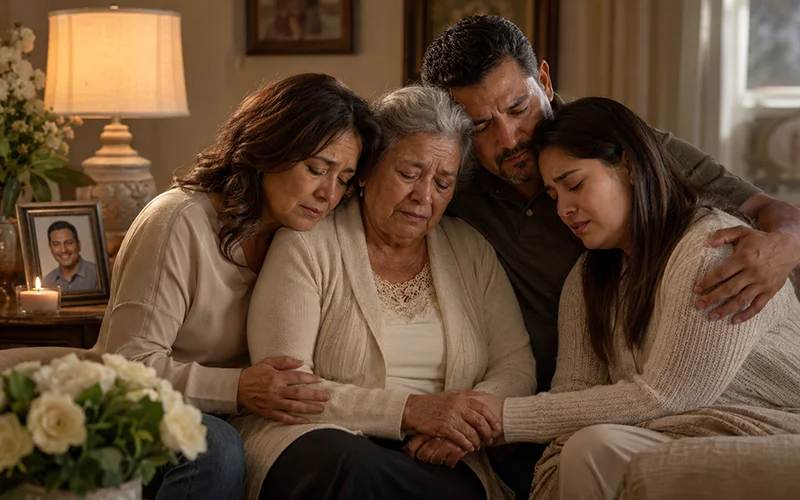

How to Cope With Grief: The 11 Principles of Transformation®

How to Cope With Grief: The 11 Principles of Transformation®

Dear friend,

If you are reading this, something meaningful in your life may have changed. You may be grieving the death of someone you love, the end of a relationship, a change in health, the loss of a pet, retirement, relocation, a shift in identity, or the future you expected to have.

You may also be wondering how to cope with grief when nothing feels familiar. I want you to know that there is nothing wrong with you for feeling disoriented, tired, angry, numb, relieved, afraid, or unable to name what you feel. Grief is deeply personal, and it does not follow a timetable.

QUICK ANSWER: Coping with grief does not mean forgetting, “getting over” a loss, or forcing yourself to feel better. It means making room for grief, love, meaning, and life to exist together. Begin gently: acknowledge what changed, allow your emotions, care for your body, reach toward safe support, and take one meaningful step at a time.

There is no single right way to grieve

Grief may come in waves. One day you may be able to work, laugh, or enjoy a quiet moment. The next day, a song, date, place, or ordinary object may bring the loss close again. A peaceful moment does not betray the person or life you miss. A difficult day does not mean you have gone backward.

Models of grief can give language to common experiences, but they should not become a checklist. You do not have to pass through emotions in a particular order. You do not need to prove that you are healing quickly enough. Your relationship, circumstances, culture, faith, body, and history all shape the way you grieve.

Moving forward does not mean moving on. It means learning how to live with a new reality while continuing to honor what matters.

Five gentle ways to cope with grief today

When grief feels enormous, reduce the size of the next step. You do not have to solve the future today.

Name what changed

Loss is not only the event itself. It may also change routines, roles, relationships, finances, identity, plans, and your sense of safety. Try completing this sentence: “What I miss or mourn today is…” Naming one part of the loss can make an invisible burden easier to understand.

Allow the feeling without judging it

Instead of asking, “Why am I still feeling this?” try asking, “What is this feeling asking me to notice?” You may need to cry, rest, write, pray, speak, create, or simply sit with what is present. Emotional expression does not have to look the same every day.

Care for the body carrying the grief

Grief can affect sleep, appetite, concentration, energy, and physical tension. Choose one basic act of care: drink water, eat something nourishing, take prescribed medication, step outside, stretch, shower, or rest. Small care is still care.

Reach toward one safe person

You do not need to tell your story to everyone. Think of one person who can listen without correcting, rushing, or comparing. You might say, “I do not need advice today. I only need someone to listen,” or, “Could you check on me this week?”

Create a small ritual

A ritual can give love and memory a place to go. Light a candle, cook a familiar recipe, visit a meaningful place, make a playlist, write a letter, tend a plant, donate in someone’s honor, or pause at a certain time of day. The ritual does not need to be public or elaborate to matter.

The 11 Principles of Transformation®

I created The 11 Principles of Transformation® as a compassionate, step-by-step framework to help people understand grief, reconnect with their inner resources, and move forward with greater meaning, purpose, and hope.

The journey begins with an introduction to loss and transformation, followed by 11 connected principles. Each principle builds on the one before it, but the goal is not to impose a rigid timeline. The goal is to give you a path you can return to.


  1. Accept Your Loss. Acceptance begins with meeting the reality of what changed. It does not mean approving of the loss or no longer wishing life were different. It means giving yourself a truthful place from which to begin.
  2. Live Your Grief. Grief needs room to be acknowledged. Living your grief means allowing your experience instead of performing strength for everyone around you or pretending the loss has not affected you.
  3. Go Deeper Into Your Spiritual Dimension. Spirituality may involve faith, nature, values, love, service, connection, or the questions that give your life meaning. This principle invites you to explore the resources that help you feel connected to something larger than the pain of the moment.
  4. Express Your Feelings. Feelings can be expressed through words, tears, movement, art, music, prayer, conversation, or quiet reflection. The aim is not to force emotion, but to give it a safe and healthy form.
  5. Share With Others. Grief can become isolating. Sharing means identifying the people and communities that can support you, asking for what you need, and recognizing that different people may be able to help in different ways.
  6. Take Care of Yourself. Self-care during grief is not indulgence. It includes tending to physical, emotional, social, and spiritual wellbeing with realistic expectations and compassion for your present capacity.
  7. Create Rituals. Rituals help us honor a person, a relationship, a chapter of life, or a transition. They can preserve connection, mark change, and give meaning to moments that are difficult to hold in ordinary language.
  8. Live the Present. The mind often travels to what happened or what will never happen. Returning to the present does not erase the past. It gives your body and mind one manageable moment in which to breathe and respond.
  9. Modify Your Thoughts. Grief can bring guilt, self-blame, fear, and rigid conclusions about the future. This principle invites you to notice thoughts that deepen suffering and explore interpretations that are more compassionate, balanced, and truthful.
  10. Rebuild Your World. Loss can change the structure of daily life. Rebuilding means gradually creating routines, roles, relationships, and sources of meaning that fit the person you are becoming while continuing to honor what you have lost.
  11. Visualize the Life You Want. Hope may feel distant, especially early in grief. Visualization is not pressure to be positive. It is permission to imagine that purpose, connection, and meaningful experiences can exist again.

How a self-paced grief program can help

Grief does not follow a calendar. Some days you may feel ready to reflect deeply. On other days, listening to a few minutes of a lesson or writing one sentence may be enough.

A self-paced program lets you pause, return, and repeat. It can provide structure without requiring you to match another person’s schedule. It may be especially helpful if you prefer privacy, live far from the support you want, need an English or Spanish option, or want to begin before you feel ready to speak in a group.

The Online Program is a complete 12-part experience that includes:

  • 12 pre-recorded video lessons you can revisit.
  • Guided reflections, structured assignments, and interactive exercises.
  • Downloadable worksheets and journal prompts.
  • Readings and supporting resources.
  • Online access in English or Spanish from anywhere in the world.

This is an educational and reflective program. It is not a test, and there is no required deadline for completing it.

What this program is and is not

The 11 Principles of Transformation® offers education, reflection, inspiration, and practical tools based on my personal and professional experience. It is designed to help you understand grief and engage with your own process in a structured way.

It is not therapy or counseling, and it does not diagnose or treat mental health conditions. It does not replace care from a licensed mental health or medical professional. Some people use the program as their first educational step. Others use it alongside therapy, a support group, spiritual care, or other appropriate resources.

The best support is the support that fits your actual needs. Choosing clinical care when you need it is not a failure of strength or faith. It is an act of care.

When additional grief support may be important

Reach out to a licensed mental health professional or medical provider if grief is making it very difficult to function, intense distress is not easing, trauma symptoms are overwhelming, sleep or substance use has become concerning, or you feel unsafe. The SAMHSA bereavement and grief resource page offers additional information and support resources.

If you are in the United States and need immediate emotional support, call or text 988. The 988 Lifeline is available 24 hours a day. Call 911 or go to the nearest emergency department when there is immediate danger.

Frequently asked questions

How long does grief last?

There is no universal timeline. Grief changes over time, but meaningful dates, places, or life events may bring it close again. Instead of measuring yourself against a deadline, notice whether you have enough support and whether you can care for your safety and basic daily needs.

Does coping with grief mean I have to let go?

No. You can continue loving, remembering, and honoring what you lost while also rebuilding your life. Moving forward is not the same as leaving love behind.

Can The 11 Principles help with losses other than death?

Yes. The framework was created for many kinds of loss and life transition, including divorce, health changes, pet loss, retirement, relocation, job or identity loss, and the loss of an expected future.

What if I cannot complete the program in 12 weeks?

The Online Program is organized as a 12-part journey, but it is self-paced. You decide when to continue, pause, or revisit a lesson. There is no required completion deadline.

Is The 11 Principles of Transformation® grief therapy?

No. It is an educational, reflective, and inspirational program. It does not replace individualized medical or mental health care.

Can I use the program while attending therapy or a grief support group?

Yes, educational resources can often complement other support. Tell your therapist or other provider what you are using so your care remains coordinated and appropriate for your needs.

Begin at your own pace

You do not have to understand the whole journey before you begin. You only need a place to take the next compassionate step.

If you want a structured path that honors your rhythm, I invite you to begin The 11 Principles of Transformation® Online Program. You can move through the complete 12-part experience privately, in English or Spanish, and return to the lessons whenever you need them.

You may also begin with one of my books on grief and transformation if reading feels like the gentlest first step.


From my heart to yours,

Ligia M. Houben

About Ligia Houben

Ligia M. Houben, MA, FT, FAAGC, CPC, CHT, is a transformational grief expert, certified thanatologist, author, and international speaker with more than 20 years of experience in grief support and transformation. She is the creator of The 11 Principles of Transformation® and the author of Transform Your Loss: Your Guide to Strength and Hope and Allow Me to Live My Grief… and Heal from the Inside Out.
EDUCATIONAL NOTE: This article is for informational and educational purposes only. The 11 Principles of Transformation® is not therapy or counseling and does not replace individualized medical or mental health care.
Online grief counseling: how to compare virtual support options

Online grief counseling: how to compare virtual support options

Grief can make even a simple decision feel exhausting. When you are already carrying a loss, sorting through online therapy platforms, grief counselors, coaches, support groups, and courses may feel like one more thing you do not have the energy to do.

I want to make that choice gentler. The phrase online grief counseling is often used as an umbrella term, but the services behind it are not all the same. Some provide licensed mental health treatment. Others offer education, coaching, peer connection, or a private way to reflect at your own pace. Understanding those differences can help you choose support that matches what you need today.

QUICK ANSWER: Online grief counseling may refer to licensed teletherapy, grief-focused counseling or coaching, peer support groups, guided educational groups, or self-paced programs. Choose licensed clinical care when you need assessment or treatment; choose coaching, community, or educational support when you want guidance, connection, or structure without clinical therapy.

What does online grief counseling mean?

In everyday searches, people often use online grief counseling to describe almost any kind of grief support available through a screen or phone. That may include video sessions with a licensed therapist, conversations with a grief specialist, a virtual support group, or a self-paced online grief program.

The important question is not only, “Is it online?” It is also, “What kind of support is this, and what is the person or program qualified to provide?”

A licensed mental health professional may assess symptoms, diagnose a mental health condition when appropriate, and provide psychotherapy within the scope of a state license. A grief coach, certified grief counselor, educator, or thanatologist may provide grief-specific guidance, reflection, and practical tools, but that role is not automatically the same as licensed psychotherapy. A peer group centers shared experience. A course or book provides education rather than individualized care.

None of these options is universally best. The right one depends on your needs, your preferences, the kind of loss you are facing, and the level of support that feels appropriate.

Five types of virtual grief support

1. Licensed online therapy

Online therapy, sometimes called teletherapy, is provided by a licensed mental health professional such as a psychologist, clinical social worker, mental health counselor, or marriage and family therapist. It may be appropriate when grief is accompanied by severe anxiety, depression, trauma symptoms, major changes in daily functioning, or concerns about your safety.

If you are considering teletherapy, verify the provider’s active license and ask whether the provider is authorized to work with clients in the state where you will be located during sessions. According to the U.S. Department of Health and Human Services, telehealth licensing requirements vary by state, and the client’s location matters.

2. Grief counseling or grief coaching

Grief-focused counseling or coaching can offer a compassionate place to understand loss, name emotions, explore meaning, and practice ways to care for yourself. Providers in this category have different educational backgrounds and credentials, so ask clear questions about training, certification, scope of practice, and whether the service is clinical or nonclinical.

This kind of support may be a good fit when you want a human guide and grief-specific conversation, but you are not seeking diagnosis or psychotherapy. It may also complement care from a licensed clinician when everyone involved understands the different roles.

3. Online grief support groups

Peer support groups bring together people who share a type of loss or life experience. Some are led by trained volunteers, bereavement professionals, clergy, or peers; others are facilitated by licensed clinicians. Groups may meet by video, phone, chat, or moderated forum.

The strength of a group is connection. Hearing another person put words to something you recognize can soften the isolation of grief. Before joining, ask who facilitates the group, how privacy is handled, whether the group is faith-based or secular, what kind of loss it serves, and whether you may attend once before committing.

4. Guided educational groups

An educational grief group follows a defined framework, curriculum, or series of exercises. It may include teaching, reflection, discussion, and practical tools. This is different from group therapy, even when the material is emotionally meaningful.

Guided educational groups can be especially useful for organizations, hospices, funeral homes, community groups, and workplaces that want a shared language for grief and resilience. They can create structure without presenting the experience as clinical treatment.

5. Self-paced programs, books, and digital resources

Some people need privacy before they are ready to speak. A self-paced grief program, book, workbook, meditation, or audio resource lets you begin quietly and return to the material when you have the emotional space for it.

Self-paced support works best when you want reflection and structure, can engage independently, and understand that the resource will not monitor your wellbeing in real time. It may be used on its own for education or alongside professional care.

Benefits and limits of online grief support

Online grief support can remove barriers that make in-person help difficult. It can offer:

  1. Access from home. This may matter when travel, mobility, caregiving, work, or geography makes regular appointments difficult.
  2. More choice. You can look for a provider, group, or program that understands your type of loss, language, culture, or spiritual perspective.
  3. Flexibility. Live sessions may offer evening options, while self-paced resources can be used whenever you feel ready.
  4. Privacy and emotional space. Beginning from a familiar environment may feel less overwhelming.
  5. Continuity. Digital materials can be revisited when grief changes or a difficult date approaches.

Online support also has limits. Technology can fail. Your home may not be private. A large platform can feel impersonal. A self-paced program cannot respond to a crisis. And a provider who is qualified in one location may not be permitted to provide clinical services where you live.

No website should promise that one format will work for everyone. A thoughtful provider will help you understand both the benefits and the boundaries of the service.

Can online grief support be effective?

Research is encouraging, but it should be described carefully. A 2021 systematic review and meta-analysis in JMIR Mental Health found improvements in grief, depression, and post-traumatic stress symptoms across the internet- and mobile-based interventions it analyzed. The authors rated the overall evidence from low to moderate quality and emphasized the limited number of studies and relatively small samples.

That means online support can be meaningful for many people, but it is not accurate to say that every digital program is equivalent to in-person therapy. Outcomes depend on the person, the type and quality of the intervention, the provider’s qualifications, and whether the format matches the person’s needs.

How to choose the right online grief support

Clarify what you want help with

Ask yourself what feels hardest right now. Do you need clinical treatment, a grief-informed guide, people who understand a similar loss, practical exercises, or a private place to begin? Your answer can narrow the search quickly.

Verify the service and the provider

Look beyond titles. Ask what credentials the provider holds, who issued them, whether a professional license is active, and what the service does and does not include. If the provider offers therapy, verify the license with the appropriate state board.

Ask about privacy

For live sessions, ask what platform is used, whether sessions are recorded, how records are stored, and what happens if the connection drops. For groups, ask members to use headphones and a private room when possible, and learn what confidentiality expectations the facilitator sets. No group can guarantee that every participant will keep another person’s story private.

Notice how the fit feels

Credentials matter, and so does the relationship. You should be able to ask questions, name discomfort, and understand the approach without feeling pressured. It is reasonable to change providers or formats if the support does not feel respectful or useful.

Know the crisis plan

Online courses, books, and peer groups are not emergency services. If you are in the United States and need immediate emotional support, you can call or text 988 at any time. Call 911 or go to the nearest emergency department if there is immediate danger.

Where The 11 Principles of Transformation® fits

I created The 11 Principles of Transformation® as a structured, educational path from grief to growth. It is not therapy or counseling, and it does not replace individualized medical or mental health care.

The Online Program is a self-paced, 12-part experience for people who want privacy, flexibility, and a compassionate framework they can revisit. It includes 12 pre-recorded video lessons, guided reflections, structured assignments, interactive exercises, downloadable worksheets, journal prompts, readings, and supporting resources. It is available in English and Spanish and can be accessed worldwide.

This option may fit you if you want to understand your grief, reconnect with your inner resources, and begin moving forward without being told how quickly you should grieve. If you need clinical assessment or treatment, begin with a licensed mental health professional instead, or ask that professional whether an educational program could complement your care.

Frequently asked questions

Is online grief counseling the same as online therapy?

Not always. Online therapy is clinical care provided by a licensed mental health professional. The phrase online grief counseling is also used for coaching, peer groups, and educational programs. Ask the provider to describe the service, credentials, and scope clearly.

Are online grief sessions confidential?

Licensed clinicians follow professional and legal privacy requirements, but the exact protections depend on the provider, platform, and location. Peer groups and courses have different privacy limits. Review the privacy policy and ask direct questions before sharing sensitive information.

How much does online grief support cost?

Costs vary widely. Some hospice and nonprofit groups are free. Therapy may be covered by insurance or offered on a sliding scale. Coaching, groups, and courses may use session fees, subscriptions, or one-time enrollment. Ask for the total cost, cancellation policy, and any recurring charges before you enroll.

Can i use a self-paced grief program while i am in therapy?

Many people use educational resources alongside therapy. Tell your clinician what you are using so the support remains coordinated. A self-paced program should complement appropriate care, not replace treatment your clinician recommends.

When should i seek a licensed mental health professional?

Consider licensed care when distress feels unmanageable, daily functioning has changed significantly, trauma symptoms are intense, substance use is increasing, or you are worried about your safety. The SAMHSA grief and bereavement resource page can help you explore additional support.

A gentle place to begin

You do not need to choose the perfect path before taking the first step. You only need enough clarity to choose the kind of support that fits this moment.

If a private, flexible, educational program feels right, I invite you to explore The 11 Principles of Transformation®. You can begin at your own pace and return whenever you need a compassionate structure for the road ahead.

From my heart to yours,

Ligia M. Houben

About Ligia Houben

Ligia M. Houben, MA, FT, FAAGC, CPC, CHT, is a transformational grief expert, certified thanatologist, author, and international speaker with more than 20 years of experience in grief support and transformation. She created The 11 Principles of Transformation® to help people understand grief, reconnect with meaning, and move forward with purpose.
EDUCATIONAL NOTE: This article is for informational and educational purposes only. The 11 Principles of Transformation® is not therapy or counseling and does not replace individualized medical or mental health care.
Bilingual grief counseling and grief support for hispanic families

Bilingual grief counseling and grief support for hispanic families

Grief speaks the language of the heart.

For many Hispanic families, that language may be Spanish, English, or both. A memory may come in one language. A prayer may come in another. A word like mamá, abuela, mi amor, or te extraño may carry a depth that cannot be translated.

When someone is grieving, language matters. Culture matters. Family history matters.

This is why bilingual grief counseling and grief support can be so important for Hispanic families.

Why bilingual grief support matters

When grief is difficult to express, language can either open the heart or close it.

Some people feel more comfortable speaking about pain in Spanish. Others express themselves more easily in English. Many move naturally between both because grief does not follow one language.

Bilingual grief support allows the whole person to be present. It allows memories, traditions, prayers, and emotions to be expressed in the language that feels true.

For families in Miami and beyond, this can make grief support feel more personal, more respectful, and more human.

Grief in hispanic families

In many Hispanic families, grief is deeply connected to family, faith, tradition, and community.

There may be wakes, prayers, novenas, anniversaries, shared meals, visits, and many ways of honoring the person who died. These traditions can bring comfort and connection.

At the same time, some people may feel pressure to be strong, to take care of everyone else, or to hide emotions that feel too heavy.

A person may hear: “You have to move on.” “Be strong.” “Do not cry so much.” “Your family needs you.”

These words may come from love, but they can make grief feel lonely.

When families grieve differently

Grief support can help you understand your emotions and create space for your pain without letting it define your entire life.

Through grief coaching, I help people explore questions such as:

  • What do I do with all this love now?
  • How do I live when life feels changed forever?
  • How can I honor my loved one without staying frozen in pain?
  • How do I release guilt, regret, or unfinished words?
  • How can I find meaning again?

These questions require tenderness. They require time. They require a space where your grief can be honored, not judged.

Give yourself permission to grieve

One person may want to talk. Another may stay quiet. One may cry openly. Another may keep working. One may turn to faith. Another may feel angry or confused.

Different grieving styles do not mean different levels of love.

Through culturally sensitive grief support, families can begin to understand that grief has many expressions. The goal is not to make everyone grieve the same way. The goal is to help each person feel seen and respected.

Bilingual grief coaching and the search for grief counseling

Many Hispanic families search for Spanish grief counseling or bilingual grief counseling because they want support that understands both the emotional pain of loss and the cultural context of the family.

Some may need clinical counseling. Others may benefit from grief coaching, books, group support, or a self-paced program.

As a bilingual grief specialist and life transitions coach, I accompany people through grief with compassion, meaning, and respect for their story. My work is grounded in helping people transform grief from the inside out.

Resources in english and spanish

Books can become beautiful companions for the grieving heart, especially when a person is not ready to speak openly.

Allow Me to Live My Grief…and Heal from the Inside Out can help individuals give themselves permission to grieve and heal with compassion.

Transform Your Loss – Your Guide to Strength and Hope offers a path for those who want to understand grief as part of a journey toward meaning and growth.

These resources can be used individually, within families, or alongside grief coaching and structured support.

The 11 Principles of Transformation® for hispanic families

The 11 Principles of Transformation® was created to help people move from grief to growth. It offers a compassionate structure that can support individuals and families as they process loss, reflect on meaning, and reconnect with life.

Because the program is available online and self-paced, it can also support people who want to begin privately, from home, and at their own rhythm.

For Hispanic families, this kind of guided path can provide language for feelings that are often kept inside.

You do not have to be strong all the time

Strength does not mean hiding your pain.

Strength can mean asking for support. Strength can mean crying. Strength can mean saying, “Today, I am not okay.” Strength can mean honoring your loved one while also caring for yourself.

If you or your family are grieving, I invite you to seek support that honors your language, your culture, your memories, and your heart.

Your grief is valid. Your story matters. And healing can begin in the language of the heart.

Frequently asked questions

What is bilingual grief counseling?

Bilingual grief counseling or grief support allows people to receive guidance in English, Spanish, or both, depending on the language that feels most natural.

Why is grief support important for Hispanic families?

Culture, faith, family roles, and traditions can shape the grieving process. Culturally sensitive support helps honor these experiences.

Is bilingual grief support available in Miami?

Yes. Ligia Houben offers grief coaching and grief support connected to Miami, with resources for English- and Spanish-speaking individuals and families.

Can The 11 Principles of Transformation® help Hispanic families?

Yes. The program offers a structured path for processing grief, reflecting on meaning, and moving from grief to growth at a gentle pace.
From my heart to yours,

Ligia M. Houben

How to heal after losing someone you love

How to heal after losing someone you love

Losing someone you love changes the way life feels.

The house may be the same, but it feels different. The calendar may continue, but time feels divided into before and after. Ordinary moments may suddenly carry memories.

When someone you love is no longer physically present, your heart may ask: How do I continue? How do I live with this love now? How do I heal without forgetting?

I want you to know that healing does not mean leaving your loved one behind. Healing means learning to carry love differently.

Grief after the death of a loved one

The death of a loved one is one of the most painful experiences a person can face. It can affect the body, the mind, the heart, and the spirit.

You may feel sadness, anger, guilt, numbness, confusion, or fear. You may feel all of these in one day. You may also feel moments of gratitude or peace, and then feel guilty for feeling them.

All of this can be part of grief.

Many people search for grief counseling after death because they need help understanding these emotions. Others seek grief coaching because they want to find meaning, reconnect with life, and honor the person they lost in a healthy way.

Healing does not mean forgetting

One of the fears I often see in grieving people is the fear that moving forward means betraying the person they love.

But love does not end. The relationship changes, but the love remains.

You can continue to remember. You can continue to speak their name. You can continue to honor their values, their lessons, and the ways they shaped your life.

Healing is not about erasing love. It is about allowing love to become part of the life you continue to live.

How grief support can help you live with loss

Grief support can help you understand your emotions and create space for your pain without letting it define your entire life.

Through grief coaching, I help people explore questions such as:

  • What do I do with all this love now?
  • How do I live when life feels changed forever?
  • How can I honor my loved one without staying frozen in pain?
  • How do I release guilt, regret, or unfinished words?
  • How can I find meaning again?

These questions require tenderness. They require time. They require a space where your grief can be honored, not judged.

Give yourself permission to grieve

Many people feel pressure to be strong after a loss. They may support everyone else while quietly ignoring their own pain.

But grief needs permission.

You are allowed to cry. You are allowed to miss them. You are allowed to have difficult days. You are allowed to need support. You are allowed to heal slowly.

This is why I wrote Allow Me to Live My Grief…and Heal from the Inside Out. Many people need to hear that their grief has a place, and that healing begins from within.

Transforming loss into meaning

There comes a time in the grief journey when some people begin to ask a new question: What now?

This question does not mean the pain is gone. It means the heart is beginning to look for meaning.

In Transform Your Loss – Your Guide to Strength and Hope, I share guidance for those who are ready to see how loss can become part of a deeper transformation. Not because the loss was good, but because life can still hold purpose after pain.

The 11 Principles of Transformation® as a path forward

When grief feels too large to understand, a guided path can help.

The 11 Principles of Transformation® is a grief transformation program designed to help you move from grief to growth. It offers structure, reflection, guided meditations, affirmations, and practical activities that support healing from the inside out.

It is available online as a self-paced program, which allows you to move gently and privately through the process.

This program is not about forgetting. It is about embracing life after loss with meaning, hope, and love.

You can carry love forward

Ask yourself:

  • What did this person teach me?
  • What part of their love still lives in me?
  • What values do I want to carry forward?
  • How can I honor them through the way I live?
  • What meaning can grow from this pain?

These questions can become part of healing. They help the heart understand that love can continue, even when life has changed.

You do not have to heal alone. Support is available, and your grief can become part of a journey toward meaning and transformation.

Frequently asked questions

How do you heal after losing someone you love?

Healing begins by allowing yourself to grieve, honoring your loved one, seeking support, and taking small steps toward life while continuing to carry love.

Can grief counseling help after death?

Yes. Grief counseling or grief coaching can help you understand your emotions, process the loss, and find a compassionate way to live with grief.

Does healing mean forgetting the person?

No. Healing does not mean forgetting. It means learning to carry love and loss together in a new way.

How can The 11 Principles of Transformation® help after loss?

The program offers a structured path to help people move from grief to growth through reflection, guided practices, and meaning-making.
From my heart to yours,

Ligia M. Houben

How to cope with grief when you feel stuck

How to cope with grief when you feel stuck

Sometimes grief does not look like crying every day.

Sometimes grief looks like going through the motions. Answering emails. Taking care of others. Smiling when people ask how you are. Continuing with life while a part of your heart still feels frozen in the moment of the loss.

If you feel stuck in grief, I want you to know that you it is a common feeling. You are grieving and at times we may feel that way.

There is a part of you that is trying to understand a reality that changed. That part needs compassion, not pressure.

What it means to feel stuck in grief

Feeling stuck in grief may mean you keep returning to the same questions, memories, or emotions. It may mean that time has passed, but your inner world still feels heavy.

You may feel stuck if you:

  • Replay the loss over and over
  • Feel guilty when you laugh or experience joy
  • Avoid memories because they hurt too much
  • Feel disconnected from people around you
  • Keep asking why without finding peace
  • Feel pressure to move on but do not know how
  • Are afraid healing means forgetting

This is one of the moments when grief counseling, grief coaching, or a structured grief program can help. Not because someone can take your grief away, but because support can help you understand what your grief is asking for.

How grief counseling or grief coaching can help

When people search for how to cope with grief, they are often looking for something deeper than a list of tips. They are looking for relief. They are looking for meaning. They are looking for a way to breathe again.

A grief counselor or grief coach can help you name what you are feeling, recognize the patterns of grief, and begin to relate to your loss with more compassion.

In my work as a grief coach, I guide people to understand that grief is not something to “get over.” It is something to live, honor, and transform.

Begin by validating what you feel

One of the first steps in healing is validation.

You may need to say to yourself:

  • This loss matters.
  • My pain is real.
  • I am allowed to grieve.
  • I do not have to heal on someone else’s timeline.
  • Feeling stuck does not mean I am broken.

Validation is powerful because it stops the inner fight. Instead of judging your grief, you begin to listen to it.

Why the stages of grief may not explain everything

Many people wonder if they are moving through the stages of grief correctly. But grief is not a straight line. You may feel acceptance one day and anger the next. You may feel peace in the morning and sadness at night. You may not experience all the stages as our grief is unique.

Experiencing different emotions at once is natural in grief.

Rather than asking, “What stage am I in?” try asking, “What does my grief need today?”

That question opens the heart to care instead of judgment.

A Book can be a private first step

If talking about your grief feels difficult, a book can be a gentle place to begin.

Allow Me to Live My Grief…and Heal from the Inside Out was written for those who need permission to feel their grief, honor their emotions, and begin healing from within. This book was inspired by the loss of my beloved mother and I share what helped me in my grieving process and what can also help you.

If you are ready to explore how pain can eventually become part of a deeper transformation, Transform Your Loss – Your Guide to Strength and Hope can also accompany your journey as it is there where I introduced my methodology The 11 Principles of Transformation®

When structure helps the grieving heart

When grief feels overwhelming, structure can help the heart find a path.

The 11 Principles of Transformation® was created as a step-by-step program to help people move from grief to growth. It offers reflection, guided practices, and a meaningful process for those who want to transform pain without denying it.

The purpose is not to rush you. The purpose is to accompany you.

A gentle way forward

If you feel stuck, begin with one compassionate step.

Write one sentence. Say the name of the person you miss. Take a walk. Read a page. Ask for support. Let yourself cry. Let yourself rest.

Healing does not happen all at once. It begins when you stop fighting your grief and begin caring for the heart that carries it.

Frequently asked questions

Why do I feel stuck in grief?

You may feel stuck because your heart and mind are still trying to understand the loss. Grief can affect your emotions, identity, relationships, and sense of meaning.

When should I seek grief counseling or grief coaching?

You may benefit from grief counseling or grief coaching if your grief feels overwhelming, isolating, repetitive, or difficult to process alone.

Do the stages of grief happen in order?

No. Grief is not always linear. You may move back and forth between emotions, and that does not mean you are grieving incorrectly. Keep in mind that not everybody experience the stages as grief is unique.

Can a self-paced grief program help if I feel stuck?

Yes. A self-paced grief program can give you structure and reflection while allowing you to move through grief at your own rhythm.
From my heart to yours,

Ligia M. Houben