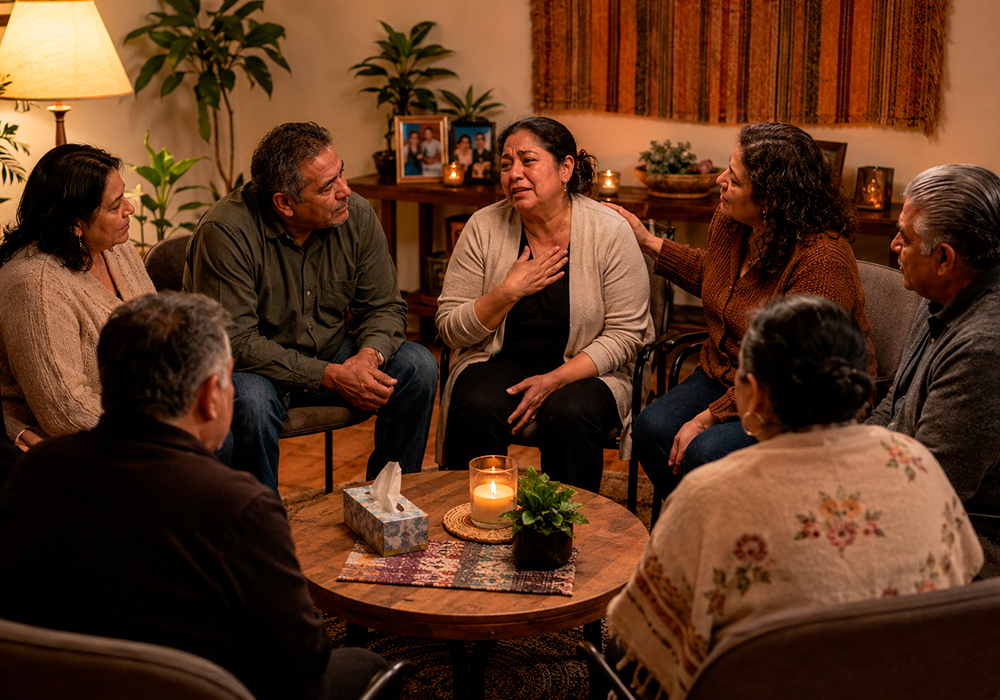

How to find grief support groups in Miami and online

Grief can feel isolating even when caring people surround you. Friends and family may love you deeply but not understand the particular shape of your loss. A grief support group can offer something different: a place where you do not have to explain why a date matters, why your emotions change, or why you need to tell the same story again.

Finding the right group takes more than typing “grief support groups near me” into a search bar. Programs differ in purpose, leadership, cost, faith perspective, privacy, age range, and the kinds of loss they serve. This guide gives you concrete places to look in Miami and online, along with questions that can help you choose wisely.

QUICK ANSWER: To find a grief support group in Miami, begin with established bereavement organizations such as Children’s Bereavement Center, Catholic Health Services, VITAS Healthcare, and the University of Miami’s Center for the Advancement of Bereavement Care. For online or nationwide options, use verified directories from GriefShare, The Compassionate Friends, and Dougy Center. Always confirm the current schedule, eligibility, facilitator, cost, and group format before attending.
RESOURCE NOTE: The resources in this article were reviewed in August 2026. Group schedules, locations, fees, and eligibility can change. Confirm current details directly with each organization.

What is a grief support group?

A grief support group brings people together around a shared experience of loss. The group may focus on listening and peer connection, teach a curriculum, provide spiritual support, or offer clinical treatment. Those are not interchangeable formats.

Peer grief support group

Peer groups center shared experience. They may be led by trained volunteers, bereavement professionals, or peers. Members listen, share, and learn from one another. Peer support is not the same as psychotherapy.

Professionally facilitated support group

A bereavement specialist, social worker, counselor, chaplain, or other trained professional guides the conversation and maintains group boundaries. Ask whether the facilitator is licensed and whether the group is clinical or nonclinical.

Group therapy

Group therapy is mental health treatment led by a licensed clinician. It may involve assessment, treatment goals, clinical records, and state-specific telehealth rules. If you are seeking treatment for depression, trauma, prolonged grief, or another mental health concern, confirm that the service is actually group therapy.

Educational or faith-based grief group

These groups follow a structured curriculum, spiritual framework, or series of lessons. They can provide valuable tools and community, but they should describe themselves accurately and explain their perspective before you enroll.

Grief support groups and bereavement resources in Miami

Children’s Bereavement Center and Lift From Loss®

Children’s Bereavement Center provides free, open-ended peer grief support groups for children, teens, young adults, and adults who have experienced the death of a loved one. The organization reports that groups are available online and in person in Southeast Florida, registration is required, and participants may join throughout the year.

Options include age-based groups, adult groups in English and Spanish, child-loss groups, perinatal and infant-loss groups, and pet-loss support. Groups are co-facilitated by mental health professionals and trained volunteers. This is a strong starting point when several members of a family need age-appropriate support or when you want a free, non-denominational peer group.

Catholic Health Services and Catholic Hospice

Catholic Health Services offers bereavement support and free support groups for adults. Its grief support page states that services are available to the broader community and may continue for up to 13 months after a loss.

Because locations and schedules change, use the current grief support page or contact the bereavement team before attending. Also ask how explicitly faith is incorporated into the group so you can decide whether the setting fits your beliefs and preferences.

VITAS Healthcare

VITAS grief and bereavement services include free phone and Zoom grief support groups, along with one-hour topic-based support sessions facilitated by bereavement services managers.

Some VITAS groups are designed for hospice caregivers and families, while offerings and eligibility may vary. Review the current group description and ask whether the program is open to the public or connected to hospice care.

University of Miami Center for the Advancement of Bereavement Care

The Center for the Advancement of Bereavement Care at Sylvester Comprehensive Cancer Center provides grief information, bereavement resources, education, and opportunities to connect with support and research.

This can be a useful referral point when a loss is connected to cancer or medical care, or when you want help locating specialized bereavement services. Contact the center to confirm current groups, webinars, referrals, and eligibility.

How to find online grief support groups

Online groups can be meaningful when transportation, health, work, caregiving, geography, or emotional readiness makes an in-person meeting difficult. They also give you access to groups focused on a specific type of loss.

GriefShare group finder

The GriefShare group directory lets you search by location and filter for in-person or online meetings and discussion language. GriefShare is a 13-week, Christ-centered program hosted or sponsored by churches. It may be a good fit if you want a clearly Christian and Bible-based approach. If that perspective does not fit you, choose a secular or interfaith option instead.

The compassionate friends

The Compassionate Friends supports parents, siblings, and grandparents after the death of a child. Its website includes a chapter locator, online communities, and virtual support options. This is a specialized resource, so confirm that the relationship to the person who died matches the group you are considering.

Dougy Center program finder

The Dougy Center Grief Support Program Finder searches a worldwide directory of grief support centers. Dougy Center focuses on children, teens, young adults, and families before and after a death, making the directory especially useful for family and youth support.

Virtual programs from Miami organizations

Children’s Bereavement Center offers online groups as well as Southeast Florida locations, and VITAS offers phone and Zoom groups. Starting with a local organization can be helpful when you want virtual access now and the possibility of in-person resources later.

Search by the type of loss

The most helpful group is often one where the members’ experiences overlap enough to create recognition. Try combining your location with a more specific search, such as:

  1. Grief support group for loss of a spouse in Miami.
  2. Child-loss support group in South Florida.
  3. Pregnancy-loss or infant-loss support group online.
  4. Suicide-loss survivor group near me.
  5. Pet-loss support group online.
  6. Young adult grief support group in Miami.
  7. Spanish grief support group in Miami.
  8. Secular grief support group online.

Read the eligibility language carefully. Some groups support grief after a death only; others welcome divorce, health changes, caregiving, job loss, or other life transitions.

Questions to ask before joining a grief group

You have the right to understand the space before sharing your story.


  1. Who is the group for? Ask about age, type of loss, relationship to the person who died, how recent the loss must be, and whether family members can attend together.
  2. Who facilitates the group? Learn whether the leader is a peer, trained volunteer, bereavement professional, clergy member, or licensed clinician.
  3. Is this peer support, education, spiritual support, or group therapy? The organization should be able to name the format clearly.
  4. What beliefs or values shape the group? Ask whether it is secular, interfaith, or connected to a particular religious tradition.
  5. What are the privacy expectations? Learn whether meetings are recorded, how online access is controlled, and what members agree not to share outside the group.
  6. Is speaking required? A respectful group should explain whether newcomers may listen until they feel ready.
  7. What does it cost? Ask about registration, materials, donations, insurance, and cancellation fees.
  8. Can I attend once before committing? An introductory meeting can help you notice the pace, tone, and group dynamics.
  9. How are crises handled? Peer groups and educational programs are not emergency services. Ask what the facilitator does if someone needs a higher level of care.

What to expect at your first meeting

Most groups begin with introductions, community agreements, and an explanation of the format. You may be invited to share your name, who or what you are grieving, and what brought you to the group. You should not be forced to tell details before you are ready.

Some groups use open conversation. Others include a video, reading, prompt, ritual, or educational topic. You may leave feeling comforted, tired, uncertain, or emotionally stirred. Give yourself a little time afterward if possible.

One meeting may not reveal everything, but notice whether the facilitator maintains boundaries, prevents one person from dominating, responds respectfully to differences, and avoids unsolicited advice. A supportive group makes room for many grief experiences without turning them into a competition.

Are online grief support groups private?

Online groups can be accessible and deeply human, but privacy requires shared responsibility. Ask whether the meeting link is protected, whether participants must register, how names appear on screen, and whether recording or screenshots are prohibited.

Join from a private room when possible, use headphones, and avoid sharing another member’s story outside the group. Remember that a facilitator can establish confidentiality expectations but cannot guarantee every participant’s behavior.

If you need the legal privacy protections and individualized care associated with clinical treatment, ask specifically about group therapy with a licensed mental health professional.

How The 11 Principles of Transformation® relates to group support

A support group offers live connection. The 11 Principles of Transformation® offers a structured educational framework. They meet different needs.

The Online Program is a private, self-paced, 12-part experience with video lessons, guided reflections, assignments, exercises, worksheets, journal prompts, readings, and supporting resources in English or Spanish. It is not a support group, therapy, or counseling.

For companies, professional teams, funeral homes, hospices, grief organizations, and community groups, I also adapt The 11 Principles into customized live experiences. Formats may include a half-day, one-day, two-day, or 12-week program shaped around the audience and purpose.

You might use a support group for community and the Online Program for private reflection and structure. If you are receiving clinical care, discuss any additional program with your provider.

Frequently asked questions

How do i find free grief support groups near me?

Start with hospices, nonprofit bereavement centers, hospitals, community centers, and faith communities. In Miami, Children’s Bereavement Center, Catholic Health Services, and VITAS list free options. Always verify current eligibility and schedules.

Are online grief support groups as helpful as in-person groups?

They can be helpful for many people, especially when access or privacy makes in-person attendance difficult. The best format depends on your comfort, technology, group quality, and need for clinical care. Online peer support should not be presented as automatically equivalent to group therapy.

Can children and teens attend grief support groups?

Yes, but they should attend programs designed for their developmental stage. Children’s Bereavement Center and organizations found through Dougy Center’s directory offer age-specific options for children, teens, young adults, and families.

What if the first group does not feel right?

You can leave and try another. A mismatch may involve the facilitator, format, beliefs, group size, type of loss, schedule, or emotional tone. Choosing a different group does not mean group support cannot help you.

How often do grief support groups meet?

Some meet weekly for a set number of weeks; others are open-ended, monthly, or organized around a single topic. Review the current calendar and ask whether new members may join at any time.

Is a grief support group a substitute for therapy?

No. Peer and educational groups can offer community and tools, but they do not replace individualized assessment or treatment when clinical care is needed.

Take one small step toward connection

You do not have to choose a group today. You can begin by opening one directory, sending one email, or asking one organization about its next orientation. That is already a step away from carrying everything alone.

If you want a private structure while you look for community, I invite you to explore The 11 Principles of Transformation® Online Program. If you represent an organization that wants to support employees, families, or a community, you can contact me about a customized group experience.

If you are in the United States and need immediate emotional support, call or text 988. Call 911 or go to the nearest emergency department if there is immediate danger.


From my heart to yours,

Ligia M. Houben

About Ligia Houben

Ligia M. Houben, MA, FT, FAAGC, CPC, CHT, is a transformational grief expert, certified thanatologist, author, and international speaker based in Miami. With more than 20 years of experience in grief support and transformation, she created The 11 Principles of Transformation® for individuals, groups, and organizations navigating grief, loss, and life transitions.
EDUCATIONAL NOTE: This article is for informational and educational purposes only. It does not provide a diagnosis, treatment plan, or individualized medical or mental health advice.