

Find Grief Support Groups Near You Today: Your Guide to Local and Online Help

Grief is one of the most difficult journeys we will ever face. After the loss of a loved one, many people tell me they feel alone, misunderstood, or unsure of how to navigate the emotions that accompany loss.

As a grief specialist, author, and facilitator of grief support groups for more than two decades, I have witnessed firsthand the power of connection in the healing process. While every grief journey is unique, one thing remains true: healing becomes easier when we do not walk the path alone.

Whether you are looking for a local grief support group, grief coaching⁠, an online grief program⁠, or educational resources, there are many ways to find guidance and compassionate support during this challenging time.

This guide will help you understand the different types of grief support available and how to find the option that best fits your needs.

Why Grief Support Groups Can Help You Heal

One of the most common experiences after losing someone you love is feeling isolated.

Friends and family may care deeply about us, yet still struggle to understand what we are experiencing. Some people avoid talking about grief because they feel uncomfortable, while others expect us to be “doing better” long before we are ready.

A grief support group offers a safe and welcoming environment where individuals can share their experiences, express their emotions, and connect with others who truly understand the pain of loss.

Through the grief support groups I facilitate at The Center for Transforming Lives⁠, online, and in partnership with funeral homes and community organizations, I have witnessed how transformative it can be when someone realizes they are not alone.

One of the principles I teach through the The 11 Principles of Transformation®⁠ is that healing begins with validation. When people feel heard, understood, and supported, meaningful transformation becomes possible.

Benefits of Joining a Grief Support Group

Participating in a grief support group can help you:

  • Feel less isolated and alone
  • Connect with others who understand grief firsthand
  • Share your experiences in a safe and supportive environment
  • Learn healthy coping strategies
  • Gain perspective, hope, and encouragement
  • Build meaningful relationships with others
  • Better understand the grieving process

While a support group cannot remove the pain of loss, it can provide comfort, understanding, and practical tools for navigating your healing journey.

What Types of Grief Support Groups Are Available?

Not every grief support group is the same. Finding the right fit can make a significant difference in your experience.

Local In-Person Grief Support Groups

Many people find comfort in meeting face-to-face with others who are grieving.

These groups provide opportunities for meaningful conversations, personal connection, and a strong sense of community.

You can often find local grief support groups through:

  • Funeral homes
  • Hospices
  • Hospitals
  • Community centers
  • Faith communities
  • Counseling centers

Online Grief Support Groups

Online grief support groups continue to grow in popularity because they offer flexibility and accessibility.

Whether you live in another city, have transportation challenges, or simply prefer the privacy of your own home, virtual groups allow you to receive support wherever you are.

Many participants are surprised by how connected they feel in an online setting.

Specialized Bereavement Support Groups

Some support groups focus on specific types of loss, including:

  • Loss of a spouse or partner
  • Loss of a parent
  • Loss of a child
  • Loss of a sibling
  • Caregiver grief
  • Anticipatory grief

These specialized groups often create opportunities for deeper conversations with people who share similar experiences.

Grief Coaching vs. Grief Support Groups: What’s the Difference?
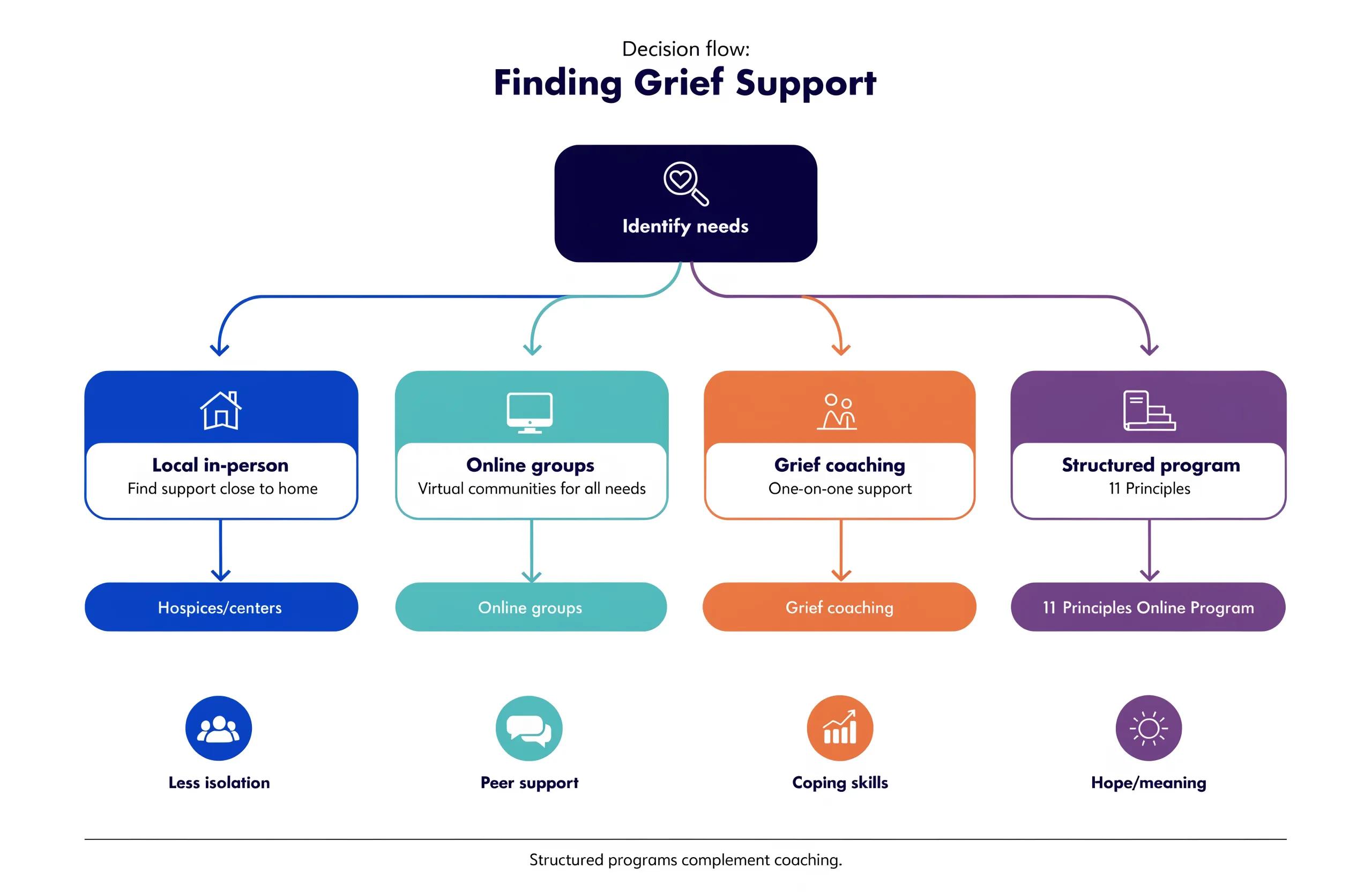
Many people wonder whether they need grief coaching, a grief support group, or both.

The answer depends on your individual needs.

Grief coaching⁠ provides personalized support that helps you process your emotions, navigate life after loss, and discover healthy ways to move forward.

Grief support groups focus on shared experiences, emotional connection, education, and peer support.

For many individuals, these two approaches complement one another beautifully, offering both personalized guidance and the reassurance of community.

How to Find the Right Grief Support Group Near You

Finding the right support group is much like finding the right therapist or coach. It is important to choose a space where you feel comfortable, respected, and understood.

Identify Your Needs

Ask yourself:

  • Do I prefer in-person or online support?
  • Am I looking for grief coaching, a support group, or both?
  • Would I benefit from a specialized bereavement group?
  • Do I prefer a structured program or an open discussion format?

Research Available Resources

Try searching for:

  • Grief support groups near me
  • Bereavement support groups near me
  • Grief counseling near me
  • Online grief support groups

You can also ask local funeral homes, hospitals, hospices, or community organizations for recommendations.

Give Yourself Permission to Explore

Not every support group will feel like the right fit, and that’s okay.

I encourage individuals to attend more than one meeting before making a decision. The most important thing is finding a place where you feel genuinely supported and understood.

Structured Grief Programs for Lasting Healing

Some individuals benefit from a more structured approach to navigating grief.

In addition to facilitating grief support groups, I developed The 11 Principles of Transformation®⁠, a transformational framework designed to help individuals move through grief while rebuilding their lives with greater meaning, purpose, and hope.

If you’re looking for a step-by-step approach that combines education, guided reflection, and practical tools, I invite you to explore The 11 Principles of Transformation®.

Structured grief programs often combine:

  • Educational guidance
  • Guided reflection
  • Practical coping tools
  • Group discussion
  • Personal growth exercises

These programs can complement both grief coaching and support groups by providing additional direction throughout the healing process.

Additional Grief Resources That Can Support Your Healing

Support comes in many forms.

In addition to grief support groups and coaching, many people find encouragement through:

  • Books & Resources⁠
  • Podcast Episodes⁠
  • Educational videos
  • Webinars
  • Support Groups & Workshops⁠
  • Community events

Sometimes a single story, conversation, or new perspective can provide the encouragement needed to take the next step toward healing.

Take the Next Step Toward Healing

You don’t have to navigate grief alone.

Whether you’re looking for one-on-one Grief Coaching⁠, a supportive community, or a structured online program like The 11 Principles of Transformation®⁠, compassionate support is available.

I invite you to explore my resources, visit my Book Store⁠, listen to my podcast⁠, or schedule a private session⁠ to find the support that best fits your healing journey.

Frequently Asked Questions

How do I find grief support groups near me?

You can start by contacting local funeral homes, hospitals, hospices, counseling centers, or community organizations. Many also offer virtual grief support groups if an in-person option is unavailable.

Are online grief support groups effective?

Yes. Many people find online grief support groups just as meaningful as in-person meetings. They provide flexibility, accessibility, and genuine connection from the comfort of home.

What’s the difference between grief coaching and a grief support group?

Grief coaching offers personalized guidance, while grief support groups provide a community where participants share experiences, encouragement, and practical insights. Many individuals benefit from participating in both.

How do I know if a grief support group is right for me?

If you’re feeling isolated, overwhelmed, or simply looking for people who understand your experience, a grief support group may be an excellent place to begin. It’s often helpful to attend more than one session before deciding whether it’s the right fit.

Can I join a grief support group even if my loss happened years ago?

Absolutely. Grief has no timeline. Whether your loss happened recently or many years ago, it’s never too late to seek support and begin a new chapter of healing.

What if I’m not comfortable sharing my story?

That’s perfectly okay. Many people attend their first meetings simply to listen. There is never any pressure to speak before you feel ready.

Do grief support groups replace therapy?

No. Grief support groups and therapy serve different purposes. Support groups provide peer connection and shared experiences, while therapy offers individualized care. Many people find that combining both creates a well-rounded support system.

Conclusion

Finding the right grief support can be one of the most meaningful steps you take after experiencing a loss.

Although grief changes us, it does not define the rest of our lives. Healing is possible when we allow ourselves to receive support, process our emotions, and discover new ways to move forward with hope and purpose.

Whether you choose Grief Coaching⁠, a local support group, an online community, or The 11 Principles of Transformation®, remember that you do not have to walk this journey alone.

If you’re ready to take the next step, I invite you to schedule a session⁠ or contact me⁠. I would be honored to accompany you on your journey toward healing, hope, and transformation.

From my heart to yours,

Ligia M. HoubenCreator of The 11 Principles of Transformation®